
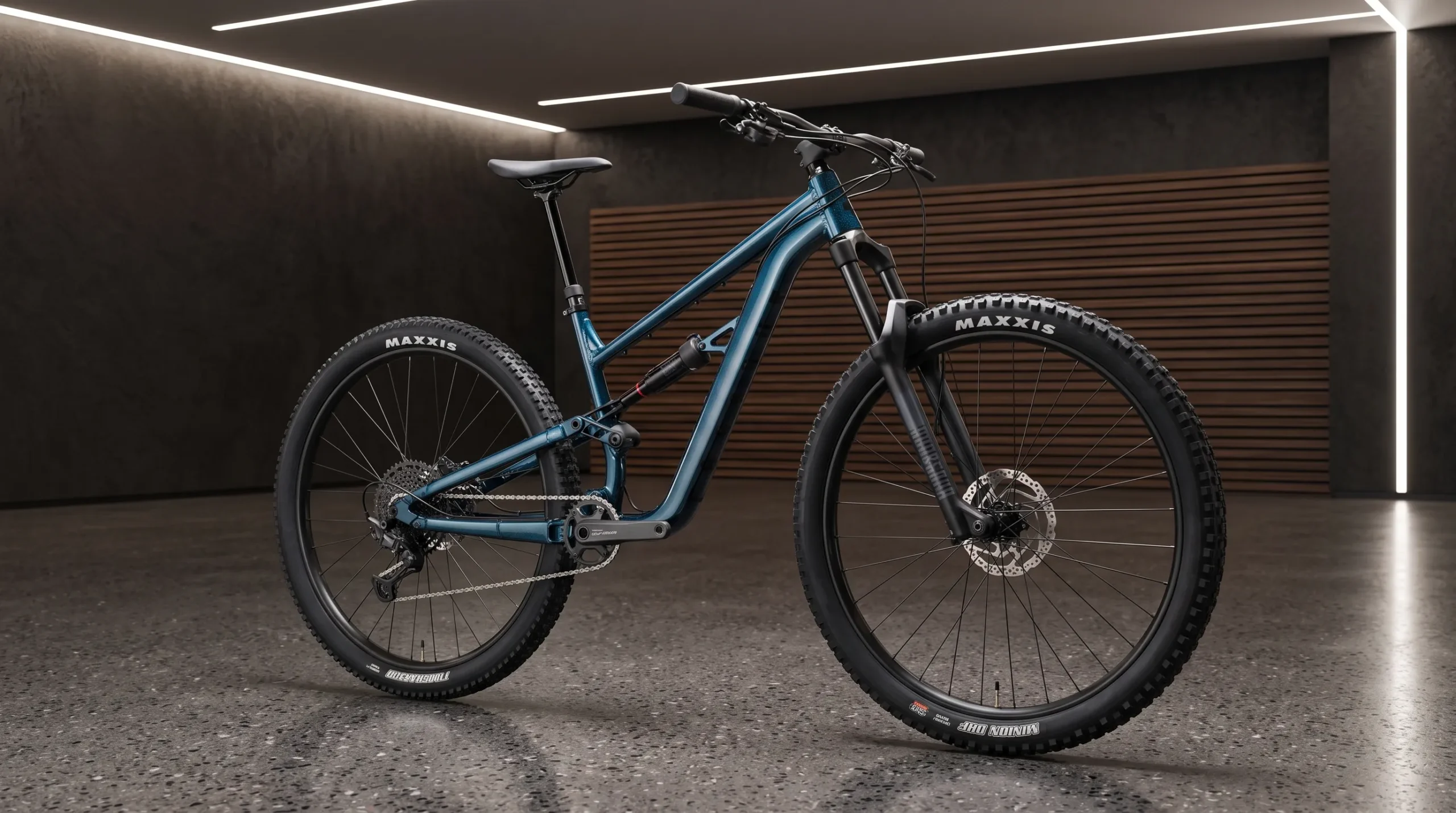
I was dropping into a steep, wet root section that I usually only ride on my long-travel enduro bike, and I braced myself for the front end to tuck and fold. But it did not. The bike tracked straight through the mess, and I realized this entry-level trail bike has geometry that rivals bikes costing three times as much. This is the 2025 Calibre Bossnut Pro, it costs roughly two thousand four hundred dollars, and there is one design and component choice that makes it brilliant for aggressive gravity riders but completely wrong for long-distance pedalers. I will explain exactly who should skip this bike after we talk about what it does exceptionally well.
First Impressions & Design
The first time I picked up the Bossnut Pro, I was struck by its sheer density. At 16.5 kilograms for a Size Large, it is noticeably heavier than almost any carbon trail bike and even outweighs many of its aluminum competitors. But here is what surprised me. Calibre did not waste money trying to shave grams off the frame. They invested in an incredibly robust custom aluminum tube set.
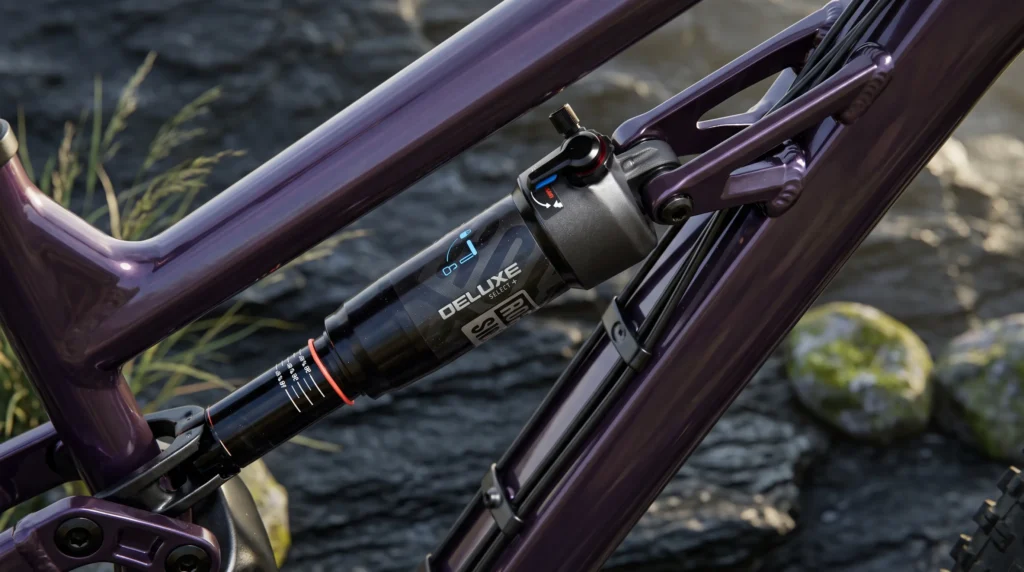
When I looked closely at the frame features, I noticed all the cables are routed externally. But instead of using cheap zip ties, the cables are clamped down with bolted alloy guides. This is not a bike trying to win a showroom weigh-in. It is a bike built for privateer racers and home mechanics who want durability and ease of maintenance above all else.
Frame & Geometry: How It Feels
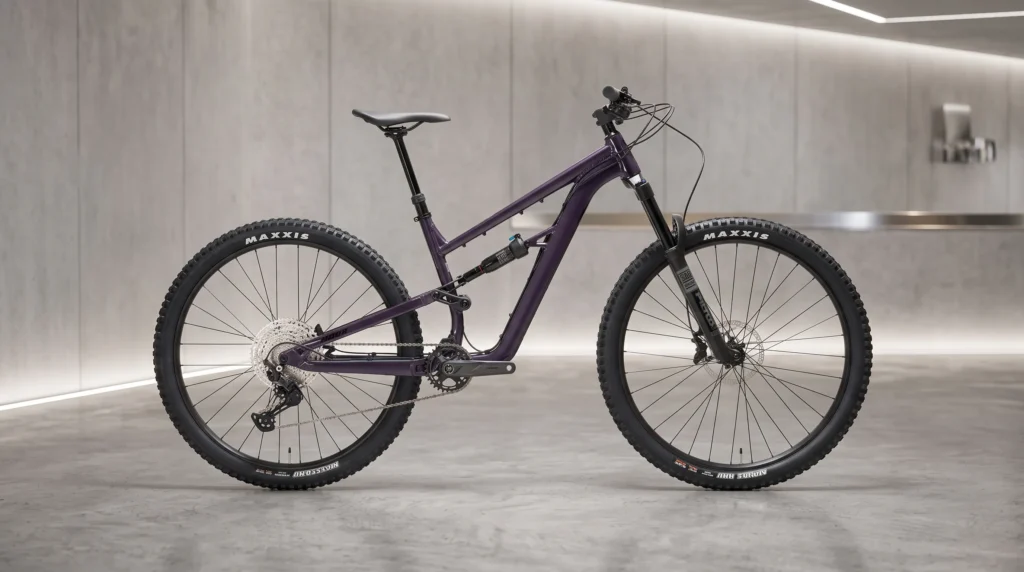
Calibre gave this bike a 64.5-degree head angle and a 475-millimeter reach for a Size Large. In practical terms, this means when I pointed it down a steep, rocky chute, the front wheel stayed planted way out in front of me. The bike feels incredibly stable and confidence-inspiring at speed. To balance that out for climbing, they used a very steep 78-degree seat tube angle. This puts your hips directly over the bottom bracket, so you are not hanging off the back of the bike when grinding up a steep hill.
This is where the geometry choice really matters. If you ride steep and fast terrain, you will love this setup. However, when I tried to navigate tight, flat forest singletrack, the slack front end made it slower to change direction compared to a more traditional 67-degree trail bike. You have to be deliberate and aggressive to muscle it through tight switchbacks.
Components
Drivetrain & Shifting
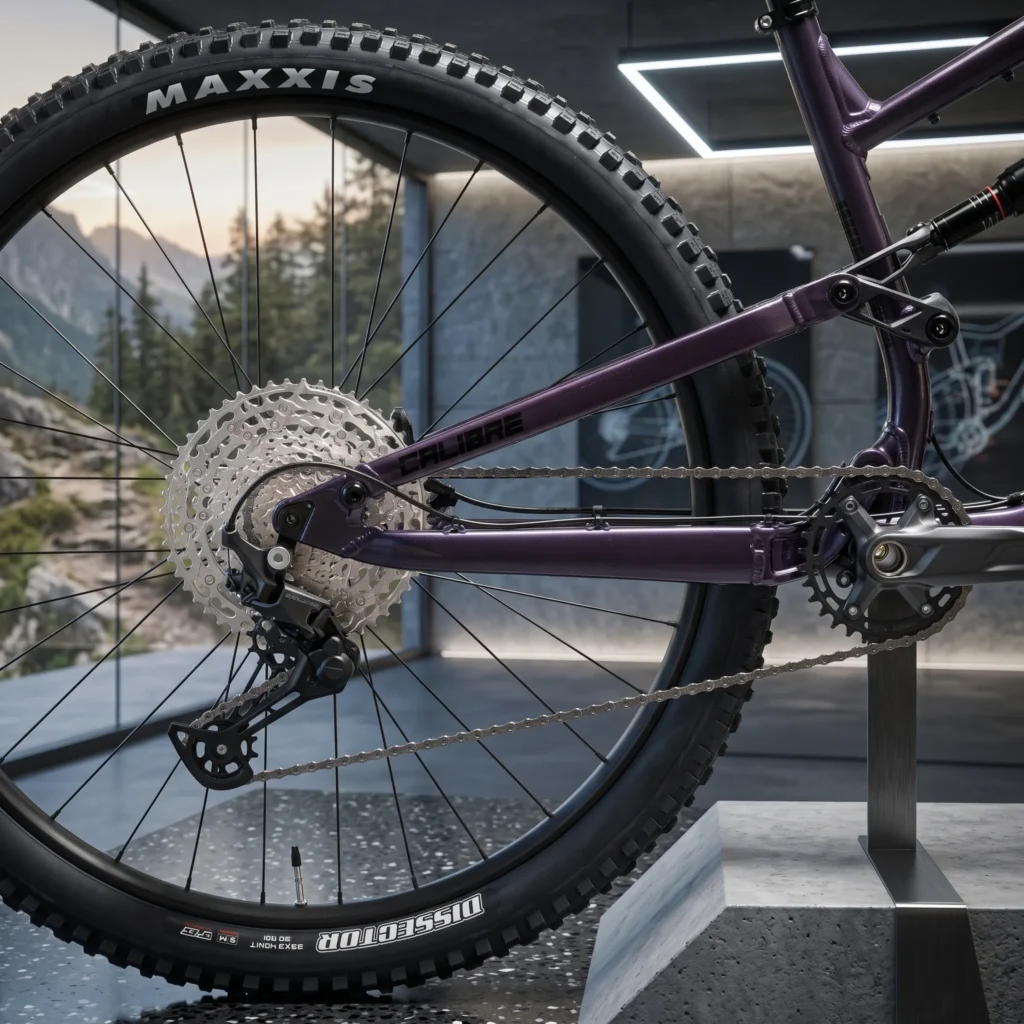
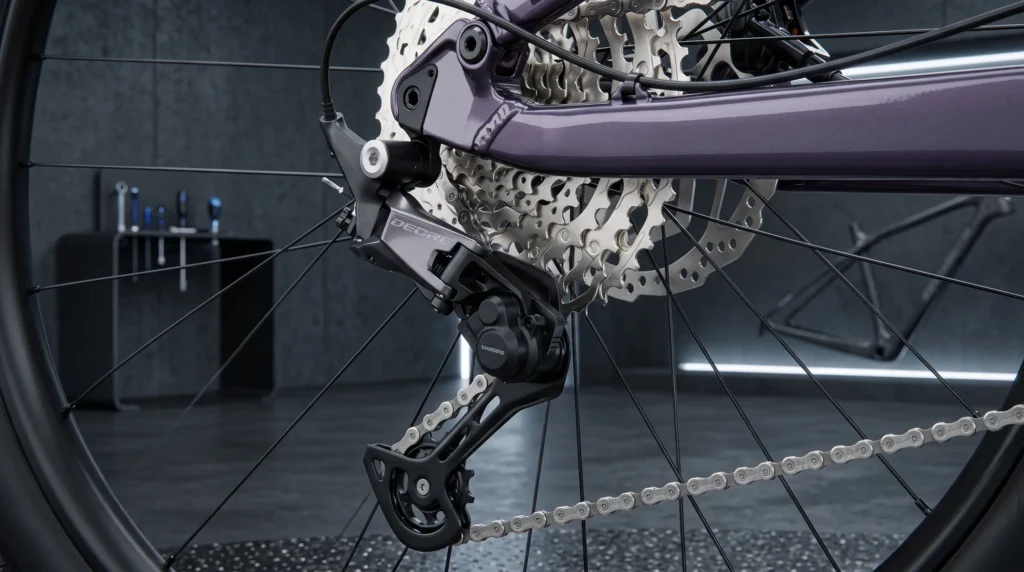
The bike comes with a complete Shimano Deore M6100 12-speed drivetrain with a 10 to 51 tooth cassette. In real-world terms, this means I had a climbing gear low enough to spin up a 20 percent gravel pitch while seated, and a top gear that let me keep pedaling on fast fire road descents.
The shifts were crisp and precise even when I was mashing hard up a climb. Calibre did not cut corners by mixing and matching cheap parts here. It is a full Deore setup. But here is the thing. Deore is Shimano’s entry point for modern 12-speed systems. It works flawlessly, but if you are someone who rides in muddy and wet conditions constantly, you might notice the shifter feel get a bit heavy over time compared to higher-tier XT components.
Brakes & Control
For brakes, Calibre specced Shimano Deore M6120 4-piston brakes with 180-millimeter rotors front and rear. The 4-piston design means you get a larger brake pad and more surface area clamping the rotor, which translates to serious stopping power with less finger fatigue on long descents.
I tested these on a long and steep descent with multiple hairpin turns. The brakes offered excellent modulation, meaning I could feather them precisely to control my speed without skidding. They use mineral oil, which is less corrosive and easier to work with than DOT fluid. Here is the trade-off. While these brakes are incredibly powerful, they lack the free stroke bite point adjustment found on more expensive models, so you have to live with the factory lever throw engagement point.
Suspension Performance
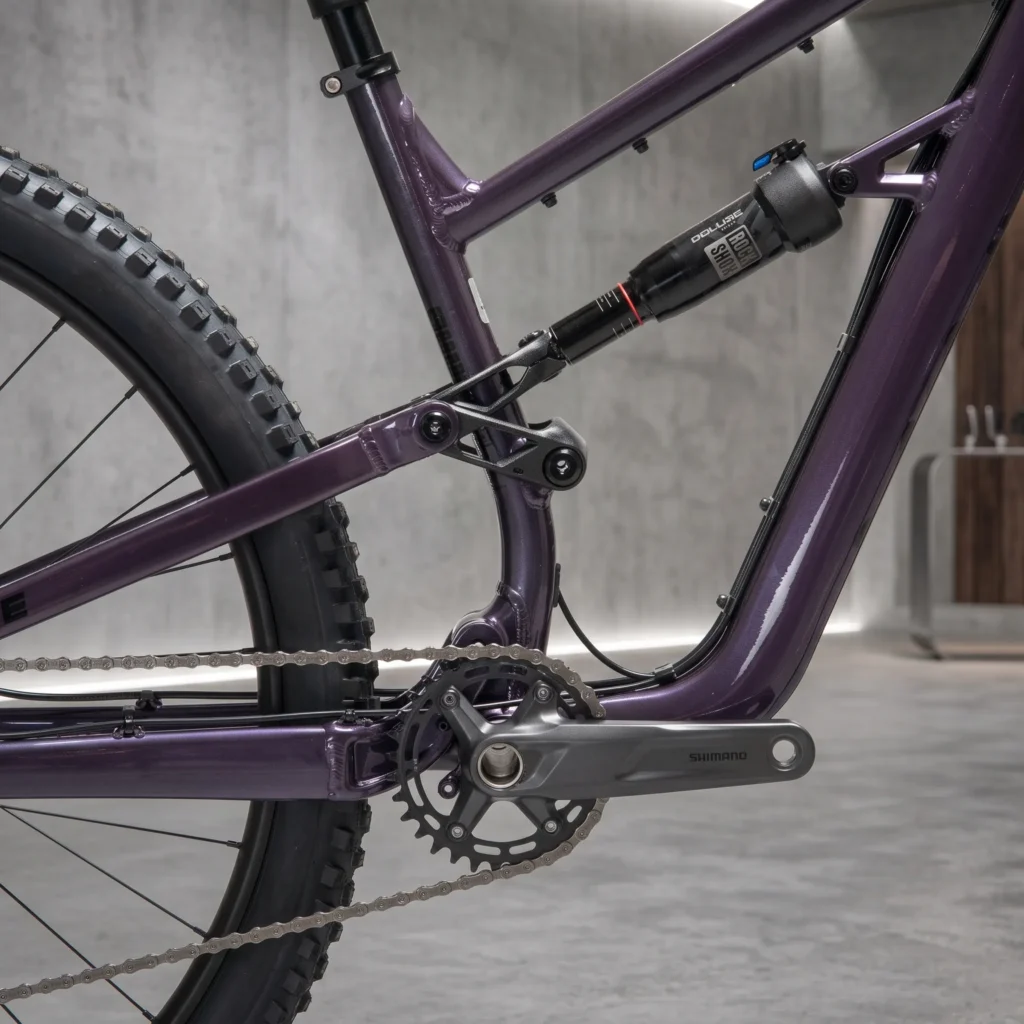
The front end is handled by a RockShox Psylo Gold air fork with 140 millimeters of travel. The rear gets a RockShox Deluxe Select Plus shock managing 135 millimeters of frame travel. The Psylo Gold is a newer mid-range fork, and I set the sag to 25 percent before heading into a chunky trail littered with loose rocks.
The fork soaked up repeated impacts beautifully, using almost all of its travel on the roughest sections without a harsh bottom-out. But here is where it falls short. When I hit a massive square-edged root at high speed, the fork did not have the sophisticated high-speed compression damping of a RockShox Lyrik. It felt slightly harsh on the biggest and fastest impacts. For most trail riding, it is absolutely excellent. For full-blown enduro racing, you will notice the limitations.
Wheels & Tires
The bike rolls on 29-inch wheels with a Maxxis Minion DHF 2.5-inch tire up front and a Maxxis Dissector 2.4-inch tire in the rear. Both feature the EXO casing and are tubeless ready out of the box. The larger wheel diameter means the bike rolls over obstacles easily and maintains momentum on rough terrain.
The Minion DHF is a legendary tire with an aggressive tread pattern that bit hard into loose corners. I could lean the bike deeply without the front washing out. However, on hardpack dirt, these heavy and aggressive tires feel slow and draggy. The wheels themselves are sturdy 30-millimeter internal width alloy rims. They are not light, but after several rides including a few hard rock strikes, they remained perfectly true.
Cockpit & Comfort
The cockpit features a 780-millimeter wide handlebar. This gave me excellent leverage for steering and made the bike feel stable through rough rock gardens. The 45-millimeter stem keeps the steering relatively quick to offset the slack head angle.
The saddle is a Calibre house brand trail seat. It was comfortable enough for a two-hour ride, but you will likely want to upgrade it if you do massive all-day epics. The bike also features an X-Fusion Manic dropper post with 170 millimeters of travel on the Size Large. Dropping the saddle completely out of the way is what allows you to move your body around on steep descents, and the action on this post was smooth and reliable.
Real-World Testing: The Ride
I took this bike out for a comprehensive real-world test, starting with a steep technical climb covered in wet roots and loose dirt. The 78-degree seat tube angle kept my weight perfectly centered, so the rear wheel maintained traction while the front wheel stayed planted on the ground. The suspension platform was firm enough that I was not wasting energy bobbing up and down. I was grinding up a tricky rock step when my friend on a lighter and steeper cross country bike spun out and had to walk. That is the advantage of aggressive geometry and grippy tires in one moment.
Quick reality check. The weight is a factor. On long and smooth fire road climbs, the 16.5-kilogram weight and those draggy Maxxis tires made me work for every meter of elevation. You sit and spin, and you will get to the top, but you will not win any uphill sprints.
On a fast and rocky descent, this is where the Bossnut Pro came alive. The slack head angle and 140-millimeter fork planted the front wheel with total confidence. I could lean into rough turns knowing the bike would track straight. I hit one particularly nasty drop into a root web at speed, and while I felt the impact, the bike remained composed and did not buck me off my line. This is where Calibre’s geometry and component choices really paid off.
I was halfway through a three-hour ride when I noticed my hands and feet were still feeling fresh. The combination of the high volume 29-inch tires and the active RockShox suspension was filtering out the high-frequency trail chatter that usually leaves me fatigued. That is the real-world benefit of a well-tuned trail bike that you do not appreciate until hour two of a long ride.
Unexpected Strengths
What surprised me most about this bike is the attention to mechanic-friendly details. I already mentioned the bolted external cable routing, but it really is a standout feature. If you snap a derailleur cable or need to replace your rear brake, you can do it in ten minutes without fishing cables through the dark inside of a frame.
Another unexpected strength is the inclusion of a full Shimano 12-speed drivetrain and 4-piston brakes at this price. Most brands sneak in a cheap chain, a generic cassette, or underpowered 2-piston brakes to hit this price point. Calibre gave you the real deal where it matters most for safety and performance.
The Competition: Real-World Alternatives
When I compare the Calibre Bossnut Pro to the Polygon Siskiu T8 and the Giant Trance X 3, the choices become crystal clear.
The Polygon Siskiu T8 costs around two thousand two hundred dollars and offers a slightly more lively and playful suspension feel. However, the Calibre wins on geometry. The Bossnut Pro is slacker and longer, which gives you significantly more stability and confidence on steep descents.
The Giant Trance X 3 takes a different approach with its Maestro suspension design and adjustable geometry flip chip, which means you can tune the bike for different trails. But the Giant usually costs a few hundred dollars more and often comes with less powerful brakes compared to the 4-piston Deore setup on the Calibre.
You are essentially choosing between the Polygon for a more playful ride, the Giant for suspension adjustability, and the Calibre for sheer descending confidence and mechanic-friendly simplicity.
The Honest Assessment: Trade-Offs and Compromises
This bike absolutely nails descending confidence. The combination of the slack geometry, capable RockShox suspension, and powerful Shimano brakes means you can point it down rough terrain with total trust. For riders who prioritize descending performance and want a bike that feels stable at speed, this is exceptional value. The component spec is remarkably well-balanced, and Calibre clearly thought about where to spend money to maximize trail performance.
Remember at the start when I mentioned there is one detail that makes this bike brilliant for aggressive riders but completely wrong for others? Here is the reality.
The combination of the heavy overall weight, the aggressive 64.5-degree head angle, and the draggy Maxxis Minion tires is the weakest link for climbing and flat trails. This means on rolling terrain or long endurance rides, the bike feels sluggish. You have to put in more physical effort to keep your momentum going compared to a lighter and steeper trail bike.
For riders who love long backcountry epics or prioritize climbing speed, this will be a frustrating experience. To work around this, you would need to swap to faster rolling tires and lighter wheels, which adds a massive expense and somewhat defeats the purpose of buying a value-focused aggressive trail bike.
Who It Is For and Not For
This bike is FOR:
Riders who are moving up from a hardtail and want to start riding steep and technical enduro-style trails without spending four thousand dollars.
The home mechanic who values external cable routing, threaded bottom brackets, and reliable Shimano components.
The rider who is willing to pedal a heavier bike uphill in exchange for massive confidence on the way down.
This bike is NOT FOR:
Cross country focused riders or anyone who prioritizes climbing efficiency and low weight above all else. You will be happier with a shorter travel and lighter bike.
Riders who exclusively ride tight, flat, and twisty singletrack, where the slack geometry will feel lazy and hard to maneuver.
Riders who want a silent bike. The external cables can occasionally rattle against the frame on the roughest descents if they are not perfectly tensioned.
Final Verdict: Buy or Skip
Buy this bike if you want the best descending geometry and braking performance possible for around two thousand four hundred dollars, and you are willing to accept a weight penalty to get it. Buy it if you ride steep and rough terrain where stability matters more than climbing speed.
Skip this bike if weight is your primary concern and you are looking for the lightest possible trail bike in this price range. Skip it if you need a bike that excels at long and fast cross country style adventures where efficiency is everything.