
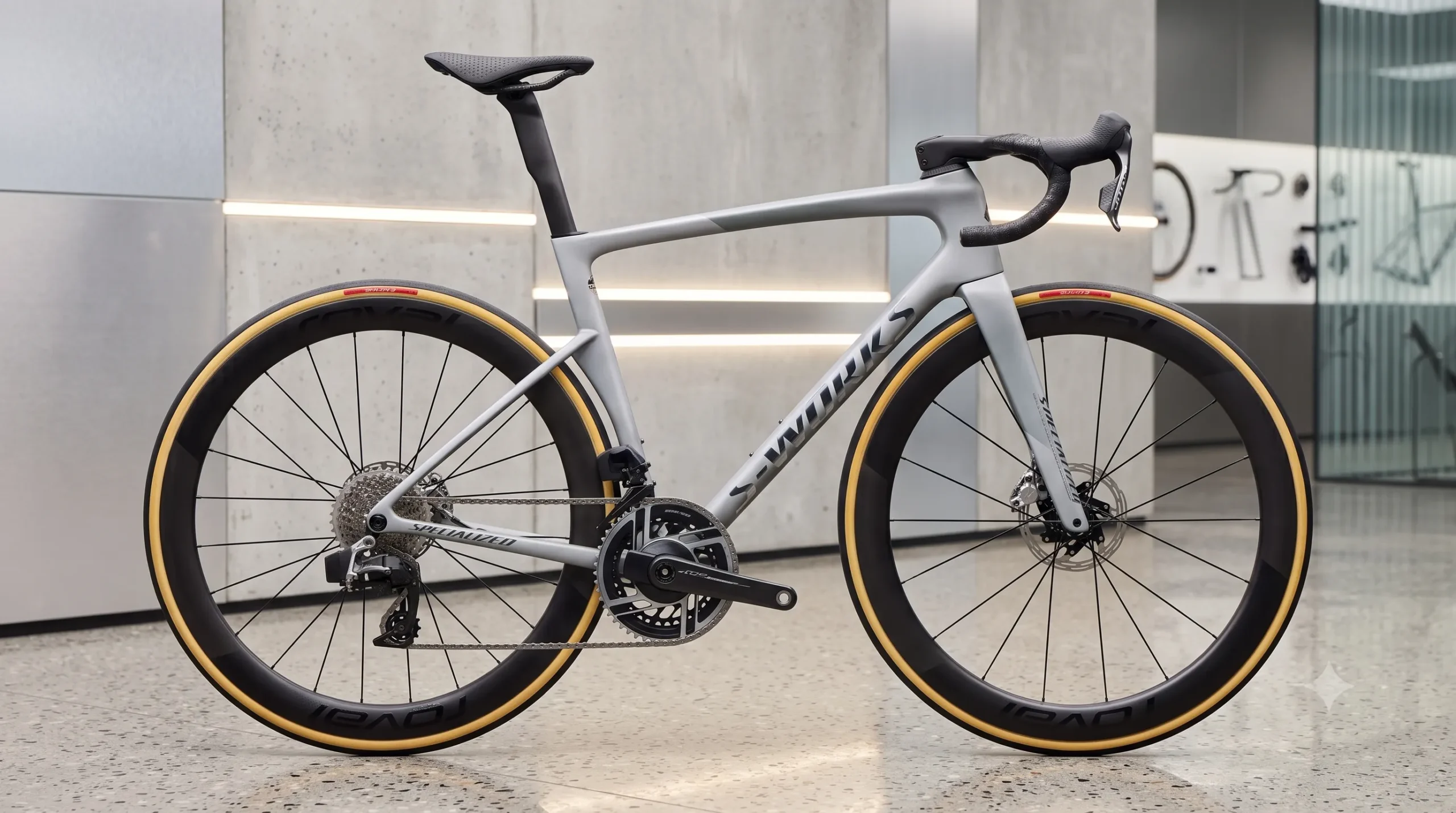
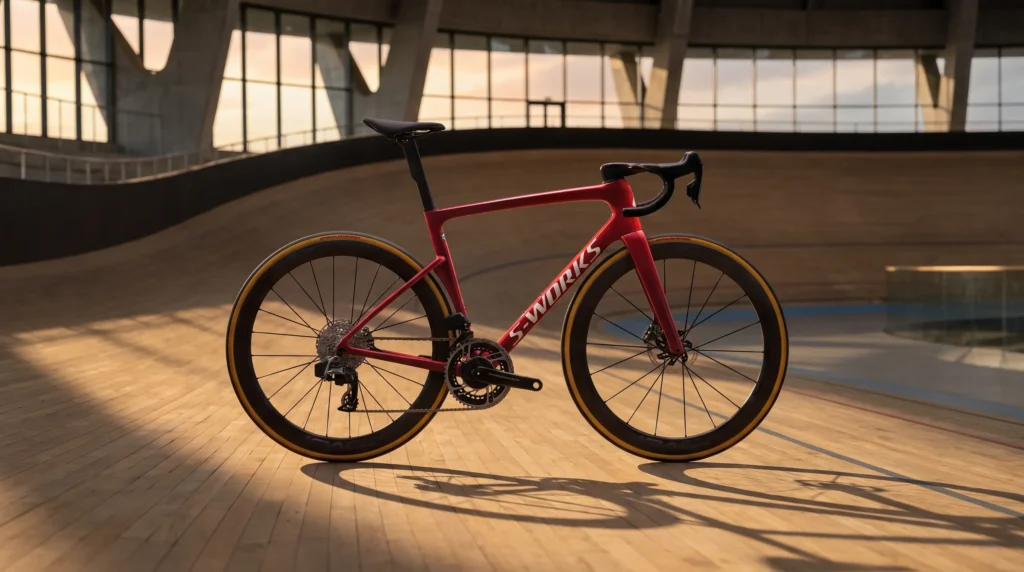
I was three quarters of the way up a 12 percent grade canyon climb when I stood up out of the saddle and realized this bike translates power into forward momentum differently than anything else I have ridden at this weight. This is the Specialized S-Works Tarmac SL9, it costs fourteen thousand dollars, and there is one specific component integration choice that makes it an absolute weapon for aggressive racers but completely miserable for casual endurance riders. I will explain exactly who should skip this after we talk about what it does exceptionally well.
First Impressions and Design
The first time I picked up the Specialized Tarmac SL9, I was struck by how little material there actually is. At six point six kilograms for a Size 56, it is noticeably lighter than almost every other aerodynamic race bike in the World Tour peloton. But here is what surprised me. Specialized did not sacrifice structural integrity or use a raw, unpainted finish to hit that number.
The frame itself is just 687 grams of FACT 12r carbon. When I looked closer at the front end, the new Speed Sniffer head tube is four millimeters narrower than the previous generation, and the downtube is significantly dropped. All of the cable routing is completely internal and flawlessly hidden. This is not a bike trying to win a pure weight contest by cutting corners. It is a fully aerodynamic race machine that simply went on an extreme diet.
Frame and Geometry: How it Feels
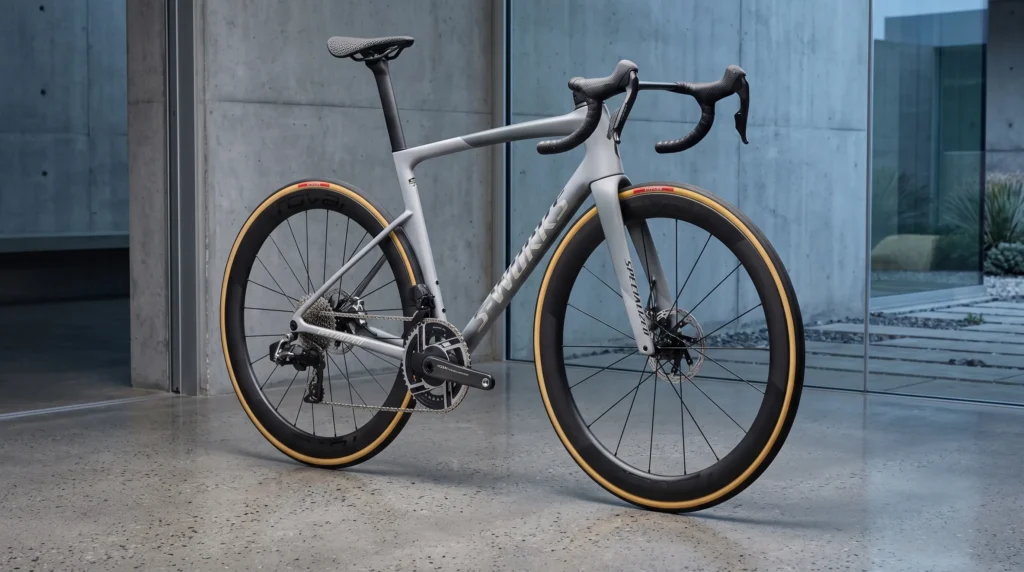
Specialized designed this with a 73 point 5 degree seat angle and 410 millimeter chainstays for a Size 56. In practical terms, this means when I threw the bike into a high speed sweeper on a fast descent, the rear wheel tracked exactly where my hips pointed it. The bike feels telepathic and instantly responsive to rider input.
However, when I tried to sit up and ride hands free to grab a nutrition bar, the incredibly steep front end required constant micro adjustments to stay in a straight line. This is where the geometry choice really matters. If you ride aggressive, fast pacelines, you will love this locked in feeling. If you want a relaxed endurance geometry for scenic century rides, it might feel like you are constantly wrestling a nervous racehorse.
Components
Drivetrain and Shifting
The bike comes with a SRAM RED AXS E1 12-speed wireless drivetrain featuring a 10 to 36 tooth cassette paired with 50 and 37 tooth chainrings up front. In real world terms, this means I had a climbing gear low enough to spin up a 15 percent pitch while seated, and a top gear that let me pedal through fast canyon descents without spinning out.
The shifts were remarkably quiet and precise, even when I was mashing hard out of the saddle. But here is the thing. While SRAM RED is top tier, the massive 10 to 36 cassette creates slightly larger jumps between gears compared to a tighter racing cassette. If you are someone who rides on dead flat roads constantly, you might notice those cadence jumps disrupting your pedaling rhythm slightly more than a traditional setup.
Brakes and Control
Specialized specced SRAM RED E1 hydraulic disc brakes. The redesigned calipers and levers mean you get significantly more pad clearance and a much lighter lever feel compared to the previous generation.
I tested these on a long, steep switchback descent dropping two thousand feet. The brakes offered excellent modulation, meaning I could feather them precisely into a hairpin turn without the grabby on and off feel that locks up the rear wheel. They use DOT fluid, which handles extreme heat incredibly well on long alpine descents. Here is the trade off. The new hood shape is quite compact. Riders with very large hands might find less surface area to grab onto during long days in the saddle.
Suspension and Compliance
Because this is a pure road race bike, we do not have a suspension fork. Instead, the compliance comes entirely from the carbon layup and the tire volume. The front end impact is handled by the S-Works FACT 12r carbon fork paired with Specialized Cotton tubeless ready tires in a 30 millimeter width.
I set the tires to sixty pounds per square inch and headed into a section of tarmac littered with frost heaves and potholes. The 30 millimeter tires soaked up the high frequency chatter beautifully, acting as a micro suspension system. But here is where it falls short. When I hit a square edged pothole at speed, the ultra stiff frame transmitted that shock directly into my lower back. For smooth to moderate roads, it is incredibly fast and efficient. For heavily broken farm roads, you will definitely feel the bike’s rigid racing pedigree.
Wheels and Tires
The bike rolls on Roval Rapide CLX III carbon wheels. The front wheel is 51 millimeters deep, and the rear is 48 point 5 millimeters deep, with a 21 millimeter internal rim width. The staggered depths mean the front wheel cuts through the wind efficiently while remaining stable in crosswinds, and the deeper rear wheel maximizes your power transfer.
The Cotton tires have a supple casing that feels glued to the road in dry corners. I could lean the bike deeply without the rear end ever washing out. However, in wet conditions, the cotton casing absorbs water and gets heavy, and the slick tread compound is strictly optimized for dry racing conditions.
Cockpit and Comfort
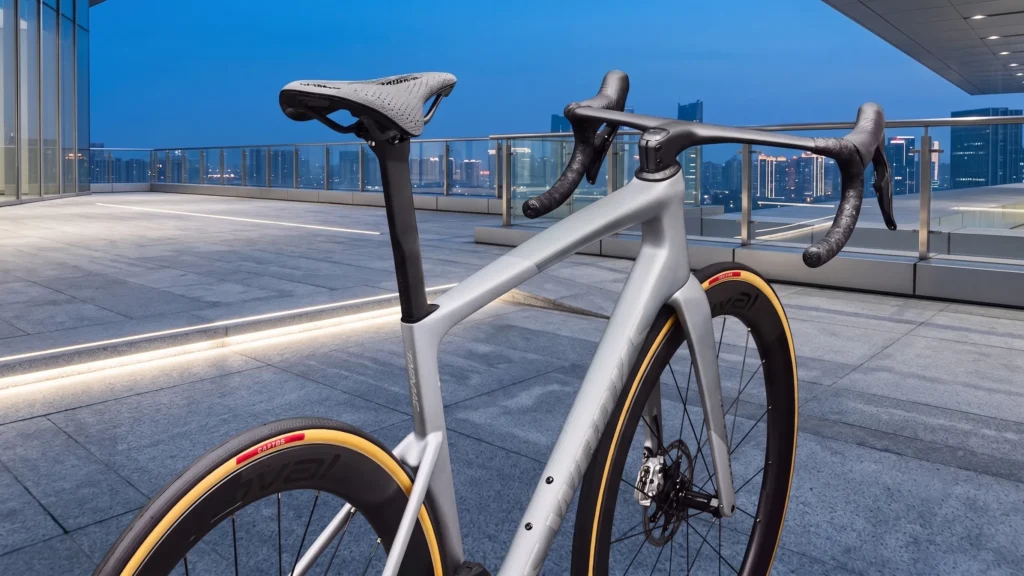
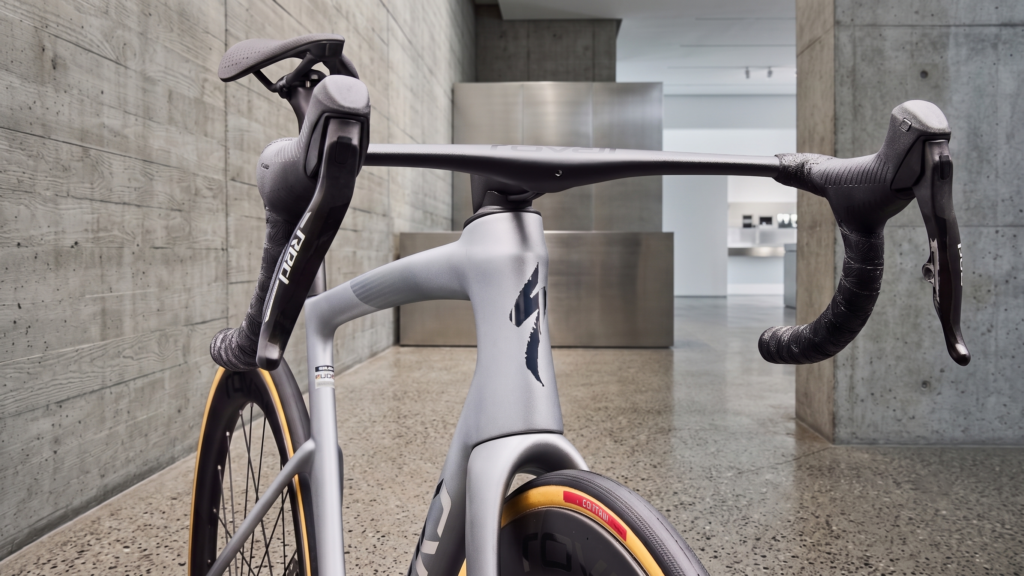
The cockpit features the Roval Rapide Integrated bar and stem. It is incredibly narrow at the hoods to reduce your frontal area, but flares out wider at the drops for sprinting leverage. The saddle is the S-Works Power with Mirror, a 3D printed saddle that is widely considered the best in the industry.
On rides under two hours, the saddle disappeared underneath me. On a four hour ride, it remained completely pressure free. The integrated carbon grips on the tops of the handlebars have no traditional bar tape, which saves weight but provides a very firm surface to hold onto.
Real-World Testing: The Ride
Climbing Performance
I took this up a steep local climb with an average gradient of 9 percent and sections hitting 15 percent. The 6.6 kilogram weight meant the bike surged forward with every pedal stroke. The massive bottom bracket stiffness meant absolutely no energy was wasted flexing the frame side to side.
However, on really steep pitches where I had to pull hard on the bars while standing, the extremely narrow width at the hoods slightly restricted my breathing by rolling my shoulders inward.
Descending Confidence
On a fast, sweeping descent, this is where the Specialized Tarmac SL9 came alive. The aerodynamic tube shapes and deep section wheels held momentum effortlessly. I could lean into rough turns knowing the 30 millimeter tires would grip securely.
I hit a massive crosswind gust at 65 kilometers per hour, and the front wheel remained stable without snatching the bars from my hands. My riding partner on a bike with standard V-shaped deep carbon wheels got knocked sideways and had to hit the brakes. That is the value of the Roval Rapide wheel profile in one moment.
Handling and Agility
In tight criterium style corners, the bike dives toward the apex the second you shift your weight. It is incredibly playful and allows you to change your line mid-corner with just a subtle drop of your shoulder.
Comfort and Vibration
I was two hours into a fast group ride when I noticed my hands were completely fresh. The carbon layup in the Roval cockpit absorbs road buzz incredibly well, filtering out the vibrations that usually leave my hands numb on ultra stiff race bikes. That is the real world benefit of highly engineered carbon fiber that you do not appreciate until hour two of a long ride.
Unexpected Strengths
What surprised me most about this bike is the tire clearance. Specialized officially clears it for 32 millimeter tires. After riding through some rough backroads, I realized you could easily swap the stock 30 millimeter rubber for 32s and turn this purebred aerodynamic race machine into a remarkably capable all road bike. This is the kind of versatility you usually only find on dedicated endurance bikes.
Another unexpected strength is the Win Tunnel Engineered rear end. Despite having a massive bottom bracket and deep aero tubes, the seatpost design actually flexes enough to save your lower back on four hour rides. I have ridden aero bikes from other brands that feel like riding a jackhammer, but the Specialized Tarmac SL9 remains wonderfully civilized.
The Competition: Real-World Alternatives
When I compare the S-Works Tarmac SL9 to the Cervelo S5 and the Trek Madone Gen 8, the choices become crystal clear.
The Cervelo S5 offers a more radical aerodynamic frame shape, which gives you maximum speed on completely flat roads. However, the Tarmac SL9 wins on weight and crosswind stability, and I found it much easier to accelerate out of slow corners on steep climbs.
The Trek Madone takes a different approach with its IsoFlow seat tube hole, which means you get slightly more seated comfort for long endurance days. But the Specialized Tarmac SL9 delivers a more direct, snappy response when you sprint out of the saddle.
You are essentially choosing between the Cervelo for pure flatland speed, the Trek for specialized frame compliance, and the Tarmac SL9 for the absolute best balance of weight, aerodynamics, and sharp handling.
The Honest Assessment: Trade-offs and Compromises
What It Does Exceptionally Well
This bike absolutely nails the balance between climbing efficiency and descending speed. The combination of the incredibly light 687 gram frame and the deep section Roval wheels means you can attack a climb and then out-descend everyone on the other side. For riders who prioritize pure speed across all terrains and want a bike that feels electric under power, this is a masterpiece of engineering. The component spec is flawless. The SRAM RED AXS E1 drivetrain and Quarq power meter are legitimate professional grade tools.
Where It Falls Short
Remember at the start when I mentioned there is one specific integration choice that makes this bike brilliant for some but wrong for others? Here is the reality that marketing will not emphasize.
The Roval Rapide Integrated Cockpit is heavily flared and very narrow at the hoods. Specialized did this to reduce your frontal area and make you 4 watts faster in the wind. This means when you are riding on the hoods, your shoulders are pulled in tight.
For aggressive racers with good flexibility, this is free speed. But for everyday riders with broad shoulders or tight lower backs, this narrow position restricts your breathing and causes shoulder fatigue after a few hours. To work around this, you would need to buy a completely different integrated cockpit, because you cannot simply swap the handlebars or the stem independently.
Furthermore, at fourteen thousand dollars, the price tag is simply astronomical. You are paying a massive premium for the S-Works logo and the absolute lightest carbon layup available.
Who It’s For and Not For
This bike is FOR:
Riders who pin on a number on the weekends and want the absolute fastest, lightest equipment available without compromise.
Someone who rides fast, rolling terrain where aerodynamic efficiency and low weight are equally important to winning the local group ride sprint.
Riders who value professional tier component quality and have the flexibility to maintain an aggressive aerodynamic posture.
This bike is NOT FOR:
The casual weekend cafe rider who prioritizes upright comfort. You will be much happier with a more relaxed endurance geometry like the Specialized Roubaix.
Riders with very broad shoulders who need wide handlebars to breathe comfortably on long climbs. The ultra narrow integrated cockpit works entirely against that body type.
Budget conscious riders. By the time you buy premium pedals, carbon bottle cages, and a computer mount, you are well over fourteen thousand dollars.
Final Verdict: Buy or Skip
Buy this bike if:
You want the ultimate aerodynamic all rounder and you have the budget to afford the absolute pinnacle of Specialized engineering.
You ride fast, hilly terrain where rapid acceleration and descending stability matter more than upright comfort.
You value having the lightest possible disc brake race bike without sacrificing aerodynamic speed.
Skip this bike if:
You have broad shoulders and struggle with narrow, aerodynamic body positions. A bike with a traditional two piece bar and stem will serve you much better.
You ride primarily broken, rough roads where tire volume and frame compliance matter more than saving 4 watts in a wind tunnel.
You are looking for the best value per dollar. The lower tier Tarmac SL8 Expert or Pro models will give you 95 percent of the performance for half the money.