
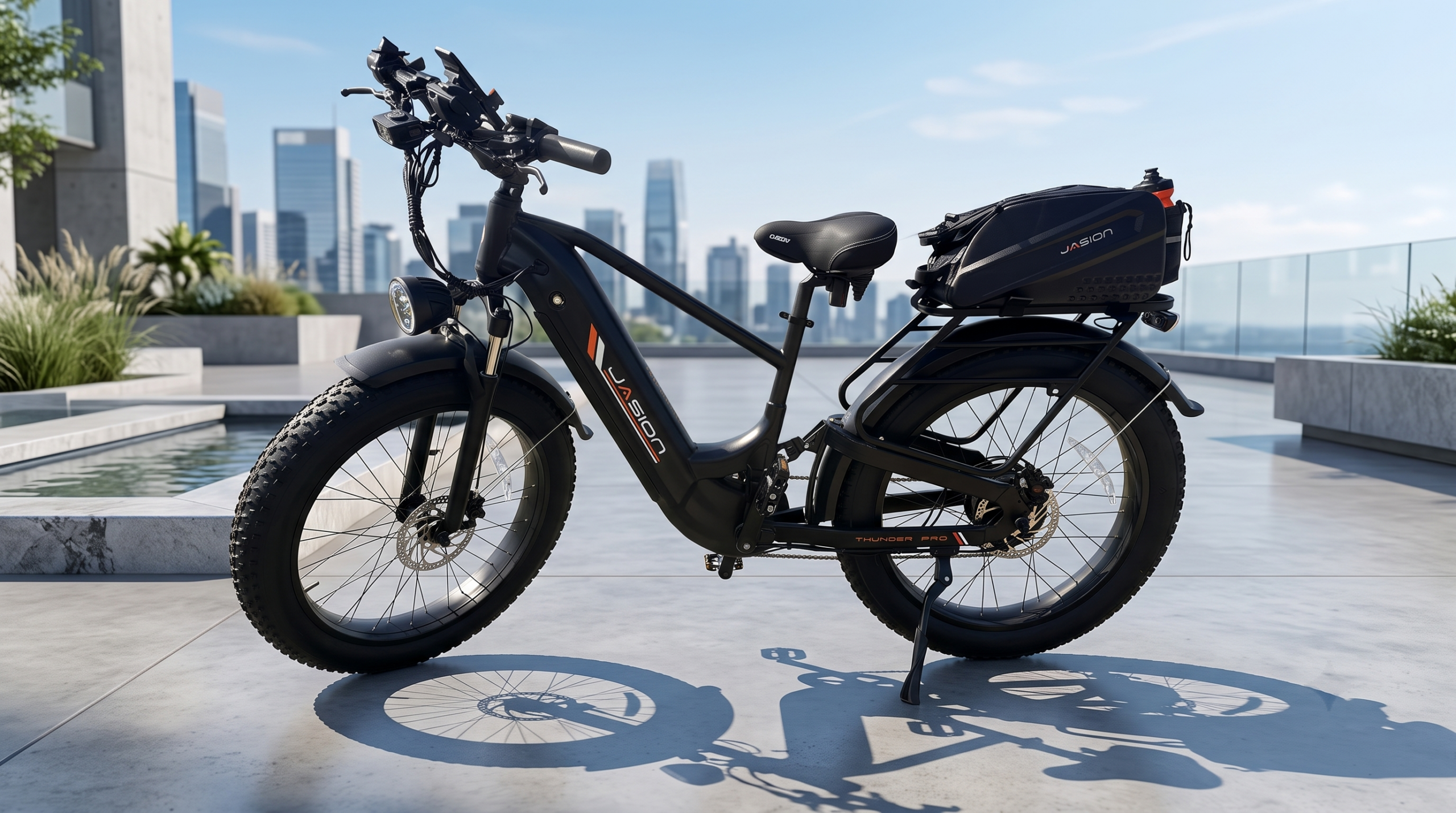
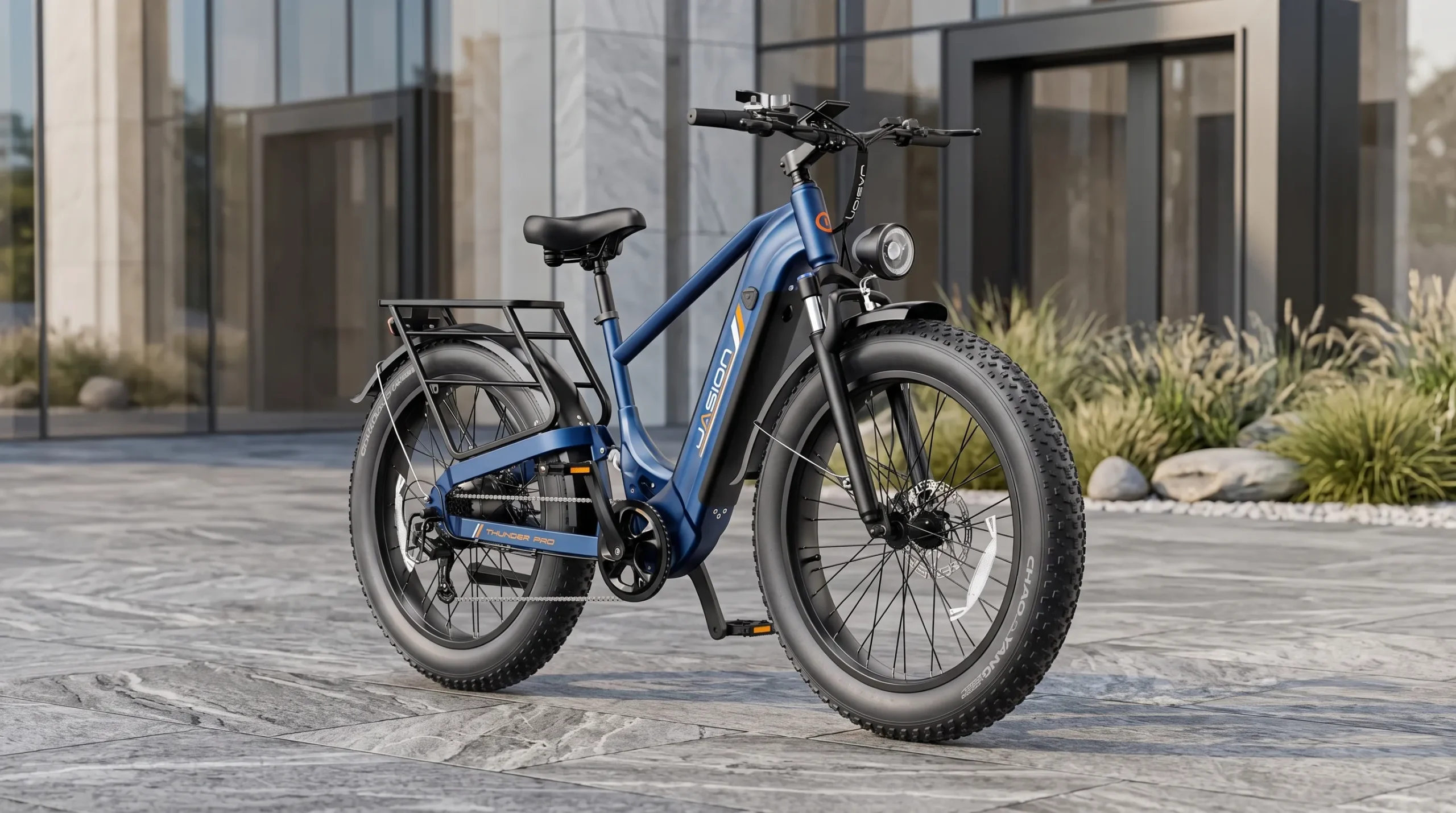
I was halfway through a deep, dry sand wash at twenty miles per hour when I realized this bike tackles loose terrain completely differently than other electric bikes I have tested. The motor simply refused to bog down. This is the Jasion Thunder Pro, it costs one thousand two hundred ninety-nine dollars, and there is one specific combination of components on this bike that makes it an absolute monster for open dirt roads but a complete nightmare for tight city commuting. I will explain exactly who should skip this bike after we talk about what it does exceptionally well.
First Impressions and Design
The very first time I picked up the Thunder Pro to move it out of my garage, I was staggered by the sheer mass of it. At eighty-two point five pounds, this is one of the heaviest bikes I have ever tested. It is noticeably heavier than standard hardtail fat tire bikes.
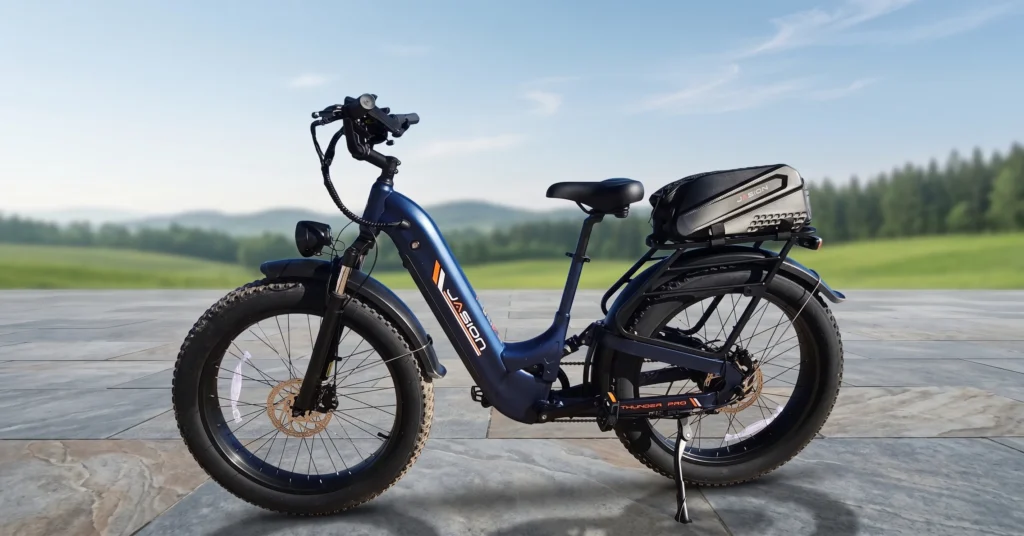
But here is what surprised me. Jasion did not build this to be a nimble commuter. They built a heavy-duty platform designed to support a five hundred pound payload capacity. When you look closely at the high-strength frame, the welds are admittedly a bit thick and sloppy in places, which is a common compromise at this price point. However, the sheer thickness of the aluminum tubing and the integrated rear rack make it feel like a small motorcycle rather than a bicycle. The cables are routed neatly away from the moving parts, keeping the front end looking clean. This is not a bike trying to win a beauty contest or a weight weigh-in. It is a utility vehicle built to haul serious weight over terrible surfaces.
Frame and Geometry: How It Feels
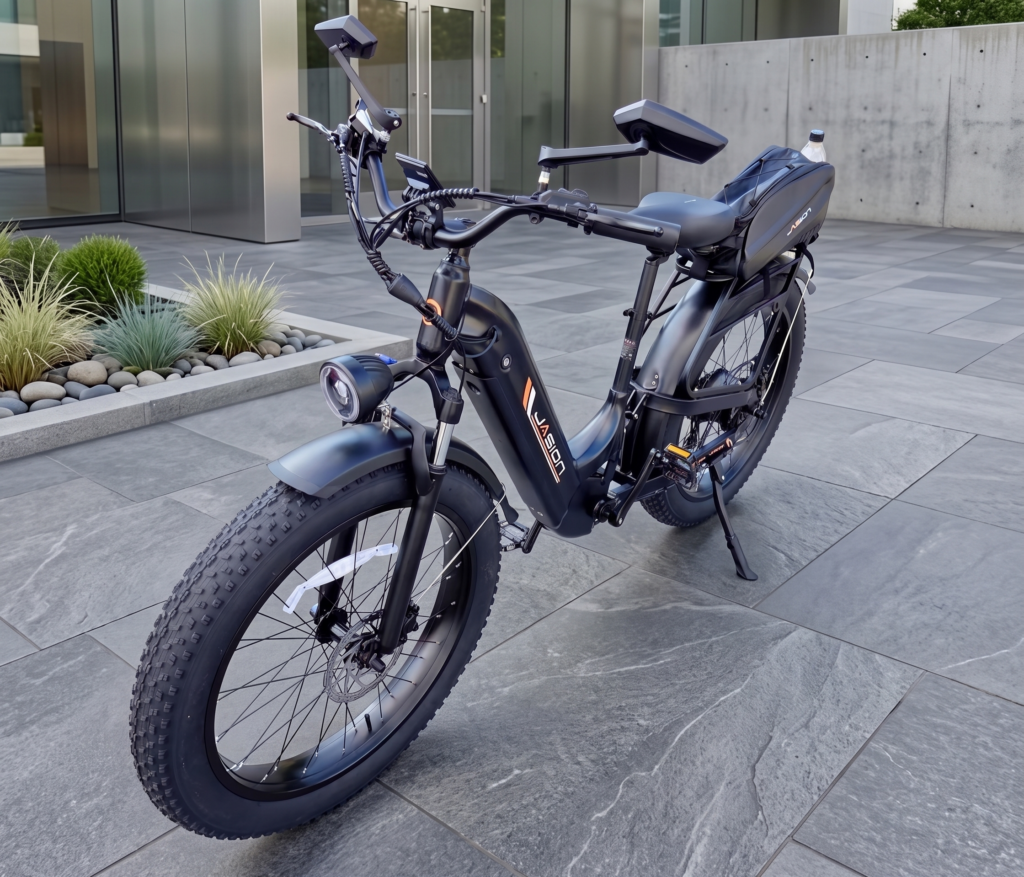
Jasion designed the Thunder Pro with a very long wheelbase and a relatively slack front end to accommodate the massive suspension fork. In practical terms, this means when I pointed it down a rutted, rocky descent, the bike felt incredibly planted. The sheer length and weight of the frame act as a stabilizing force, so the bike naturally wants to travel in a straight line regardless of what you run over.
However, when I took it onto a tight, winding forest trail with sharp switchbacks, the bike felt like driving a bus through a drive-thru. The long geometry and heavy front end make it slow to change direction. This is where the geometry choice really matters. If you ride wide open trails, straight dirt roads, or beaches, you will love the stability. If you ride tight, twisty trails where you need to flick the bike around trees, you will be wrestling this machine the entire ride.
Components: The Good, The Bad, and The Heavy
Drivetrain and Shifting
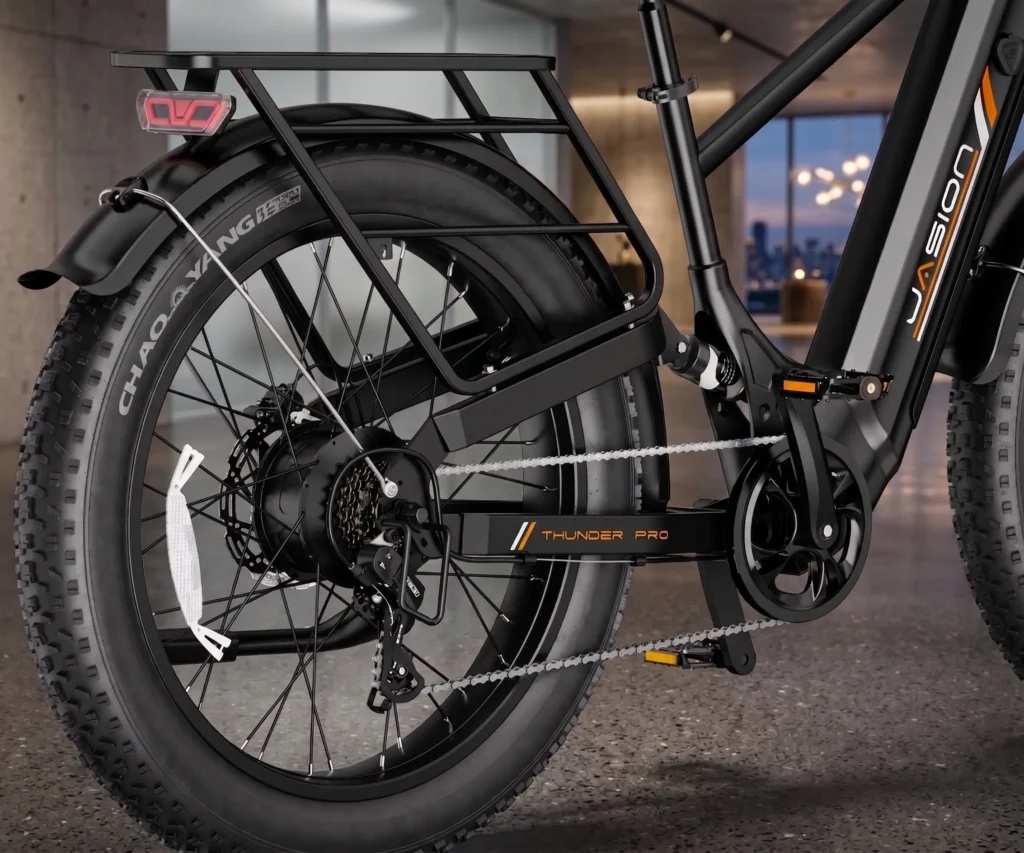
The bike comes with a Shimano Tourney seven-speed drivetrain. In real-world terms, this gives you a basic range of gears to help you climb hills or cruise on flat ground. The shifting performance is entirely acceptable. It clicks into gear reliably under light pedaling.
But let me be honest. The gearing ratio on this bike is entirely outmatched by the motor. Because it is a seven-speed with a standard fourteen to twenty-eight tooth freewheel, once you hit about twenty-two miles per hour, your legs will be spinning wildly with no resistance. You are ghost pedaling. At the bike’s top speed of thirty-five miles per hour, the pedals are essentially just footrests. If you want a bike for an intense pedaling workout at high speeds, this drivetrain will leave you frustrated.
Brakes and Control
Jasion specced this massive machine with dual hydraulic disc brakes paired with one hundred eighty-millimeter rotors front and rear. The hydraulic system means you get serious clamping force on the rotors with very little finger effort, which is an absolute necessity when you are trying to stop an eighty-two-pound bike traveling at thirty-five miles per hour.
I tested these on a steep pavement descent leading to a stop sign. The stopping power is definitely there, and the hydraulic fluid prevents the brake fade you get with cheap mechanical brakes. The trade-off is the feel. The brake levers feel a bit wooden and lack the refined, progressive modulation you find on higher-end Shimano or Tektro systems. You have to plan your braking a bit earlier, but they will absolutely bring you to a safe, controlled stop.
Suspension Performance
The front end is handled by a heavy-duty adjustable suspension fork, while the rear uses a soft-tail linkage system. The dual suspension setup means this bike isolates you from the ground in a way hardtail fat tire bikes simply cannot.
I took this through a section of trail littered with exposed tree roots. The suspension soaked up the repeated square-edged hits beautifully, preventing that jarring impact from traveling up my spine. However, the suspension lacks high-end rebound damping. When I hit a large dip at speed, the bike absorbed the hit but rebounded like a pogo stick on the way up. It is brilliant for adding comfort on gravel and dirt roads, but it is not refined enough for aggressive mountain bike jumps or severe drop-offs.
Wheels and Tires
The bike rolls on twenty-six inch by four inch puncture-resistant fat tires. The sheer volume of these tires means you can run them at low pressure, allowing the rubber to deform over rocks and float over soft sand or snow.
The aggressive tread pattern bit hard into loose dirt, giving me excellent climbing traction. But here is the catch. When you take these massive, knobby tires onto smooth pavement, they roar. They are annoyingly noisy at high speeds on the street, sounding like a lifted truck rolling down the highway. The rolling resistance is also massive, which heavily drains the battery if you do not have the tires aired up firmly for street use.
Cockpit and Comfort
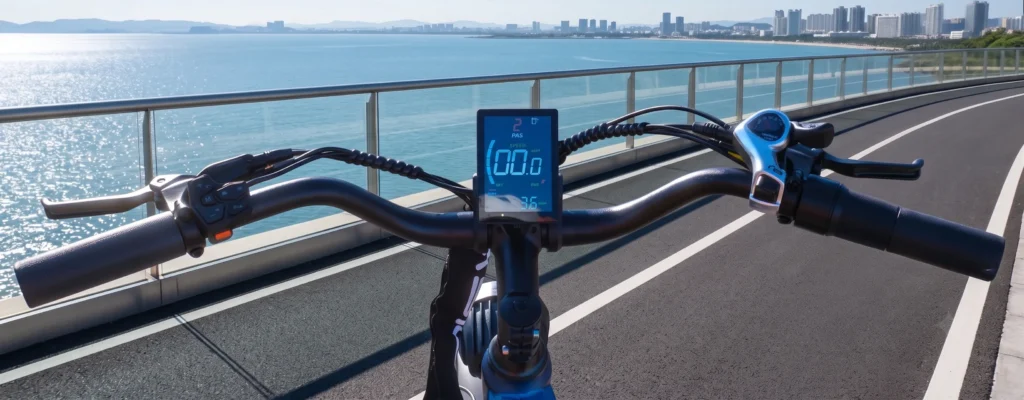
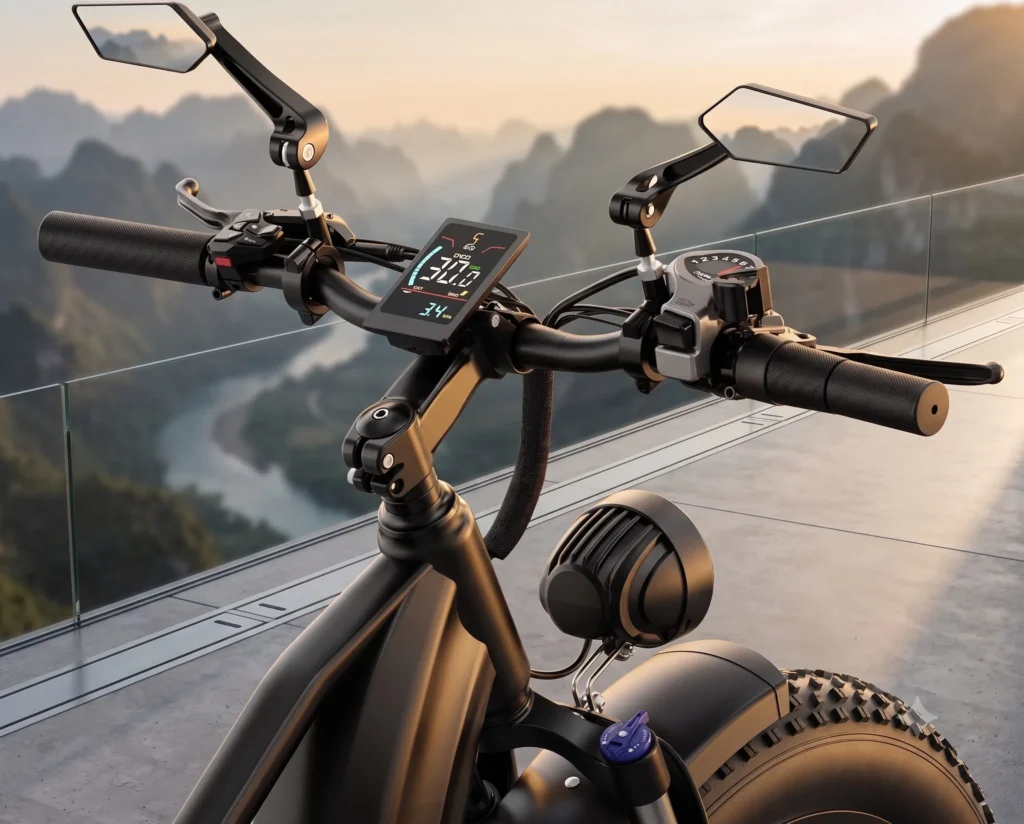
The cockpit features a wide riser handlebar, which gives you the leverage needed to steer the heavy front tire. The twist throttle is mounted on the right side, operating exactly like a motorcycle throttle. This is a fantastic choice for a bike this heavy, as a twist throttle causes far less thumb fatigue on long rides than a trigger throttle.
The saddle is a wide, ergonomic design that I found incredibly comfortable. I was halfway through a two-hour ride on rough gravel when I noticed I had zero lower back pain and my hands were not tingling. The combination of the fat tires, the dual suspension, and the plush saddle makes this one of the most comfortable cruising bikes I have ever tested.
Real-World Testing: The Ride
Climbing Performance
I took the Thunder Pro to a loose, rocky hill that usually causes standard electric bikes to stall out. I set the pedal assist to maximum and leaned forward. The sheer power of the motor dragged the heavy frame right up the hill without me having to stand up and mash the pedals. The rear tire dug in and found traction where thinner tires would have just spun out in the dirt.
Descending Confidence
On a fast dirt descent, this bike is an absolute freight train. The weight, which is a penalty on tight trails, becomes a massive advantage here. The bike refused to be deflected by loose rocks or ruts. I felt incredibly safe carrying high speeds downhill because the bike simply plowed through whatever was in front of me.
Handling and Agility
This is where the bike shows its limits. I tried to weave through some tight, closely spaced trees on a local singletrack loop. The bike felt sluggish and exhausting to muscle around. You have to muscle the handlebars to initiate sharp turns, and the wide turning radius means you have to take corners wide.
E-Bike Power Delivery and Battery
Motor Feel and Character
At the core of the Thunder Pro is a massive fifty-two volt, two thousand watt peak rear hub motor producing one hundred fifteen Newton meters of torque. In real-world terms, this is a staggering amount of power. When you twist the throttle, the acceleration throws you back into the seat.
The bike uses a cadence sensor rather than a torque sensor. This means the motor delivers power based on the pedals turning, not how hard you are pushing. When I started pedaling, there was a slight delay, and then the motor surged forward aggressively. It is incredibly fun for off-road riding, but it feels jerky and unnatural if you are trying to ride at a slow, walking pace alongside pedestrians.
Battery Performance
The battery is a massive fifty-two volt, twenty amp hour unit. Jasion claims up to ninety miles of range on the lowest pedal assist setting.
In my real-world testing, riding heavily on the throttle and using high assist levels in hilly, mixed terrain, I got about forty-two miles before the battery dipped into the danger zone. That is actually an excellent real-world result for a bike this heavy going this fast. If you rely on the throttle to hit thirty-five miles per hour constantly, expect your range to drop to around thirty miles.
Unexpected Strengths
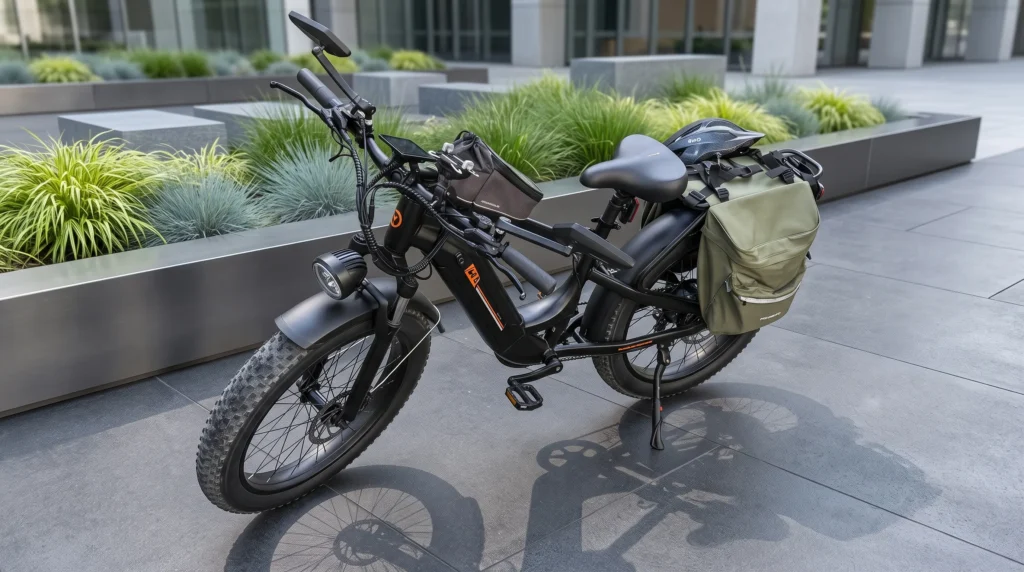
What surprised me most about this bike is its sheer utility value. Jasion includes a heavy-duty rear rack, full metal fenders, a bright integrated headlight, and a brake-activated taillight that actually features built-in turn signals.
I was using the bike to run errands, and having working turn signals on a bicycle frame made me feel significantly safer in traffic. The fact that the frame is rated for a five hundred pound payload means you can load the rear rack with a week’s worth of groceries, heavy camping gear, or even a passenger, and the motor will not even flinch.
The Competition: Real-World Alternatives
When I compare the Jasion Thunder Pro to the Aventon Aventure Two and the Himiway Cobra, the choices become crystal clear.
The Aventon Aventure Two costs around one thousand nine hundred ninety-nine dollars. It offers a highly refined torque sensor, which gives you incredibly natural, smooth power delivery, and the build quality is top-tier. However, the Thunder Pro wins on raw power, top speed, and comfort. The Aventon lacks rear suspension, meaning you will feel those harsh bumps much more than you will on the Jasion.
The Himiway Cobra is a direct competitor offering full suspension and a massive frame. The Cobra is an excellent off-road machine with slightly better frame refinement. But the Jasion utilizes a punchier fifty-two volt electrical system compared to the Cobra’s standard forty-eight volt system. This means the Thunder Pro accelerates faster and holds its top speed much better on inclines.
You are essentially choosing between the Aventon for refined, smooth city and light trail riding, the Himiway for a premium off-road name brand, or the Jasion for maximum raw power, dual suspension comfort, and utility at a significantly lower price point.
The Honest Assessment: Trade-Offs and Compromises
Remember at the start when I mentioned there is one specific combination of components that makes this bike brilliant for dirt but a nightmare for the city? Here is the reality.
The combination of the eighty-two pound weight, the aggressive cadence sensor, and the massive fat tires makes this bike incredibly cumbersome in tight urban environments. If you live in an apartment, you cannot carry this up stairs. If you commute on crowded city paths, the cadence sensor makes the bike surge forward aggressively, making slow-speed maneuvering feel jerky and stressful. Furthermore, the massive tires are loud and inefficient on perfect pavement.
But here is what it does exceptionally well.
If you ignore the city and take this out to the country, this bike shines. It dominates deep sand, muddy farm roads, and gravel fire roads. The dual suspension filters out miles of vibration, and the massive two thousand watt peak motor makes you feel completely unstoppable. For riders who want a fast, heavy-duty utility vehicle for the outdoors, the value proposition here is off the charts.
Who It Is For and Not For
This bike is FOR:
Heavy riders or hunters who need a massive five hundred pound payload capacity to haul gear over rough terrain.
Rural riders who want to fly down dirt roads or sandy beaches at thirty-five miles per hour in total comfort.
Thrill-seekers who want maximum throttle power and dual suspension without spending two thousand dollars.
This bike is NOT FOR:
Urban commuters who need to navigate tight bike lanes, carry the bike up stairs, or weave through heavy traffic.
Fitness-focused riders who want a natural pedaling workout. The cadence sensor and low gearing make pedaling at high speeds pointless.
Riders who only ride on smooth pavement, as the fat tires are loud and create unnecessary drag.
Final Verdict: Buy or Skip
Buy this bike if you view it as a two-wheeled utility vehicle. If you want unmatched raw power, dual suspension comfort, and the ability to carry heavy loads across dirt, sand, and snow, this is one of the best budget beasts on the market.
Skip this bike if you need a nimble, lightweight bicycle. If you want to pedal naturally for exercise or need something easy to maneuver through a crowded city, the weight and aggressive motor surging will drive you crazy.
Closing
The Jasion Thunder Pro is a bike that makes no apologies for what it is. It is heavy, it is loud, and it is brutally powerful. If that aligns with how you ride, you will have a massive smile on your face every time you hit the throttle.
I am curious, do you prefer a heavy, powerful electric bike with a throttle, or do you prefer a lightweight e-bike that feels more like a traditional bicycle? Let me know in the comments below.
If this review helped you make a decision, hit that subscribe button. I have got more in-depth bike reviews coming every week. Thanks for watching, and I will see you on the trail.