
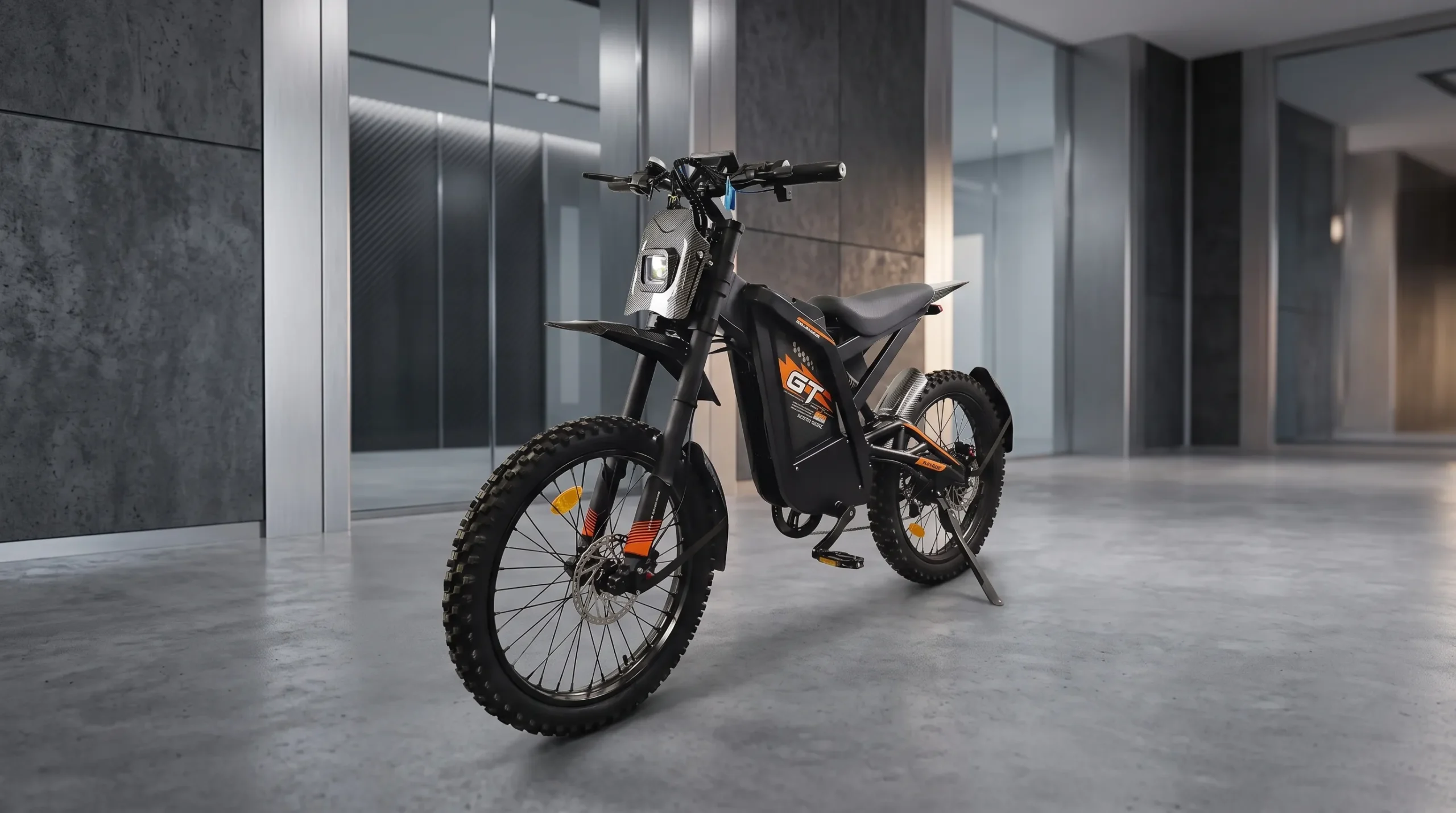
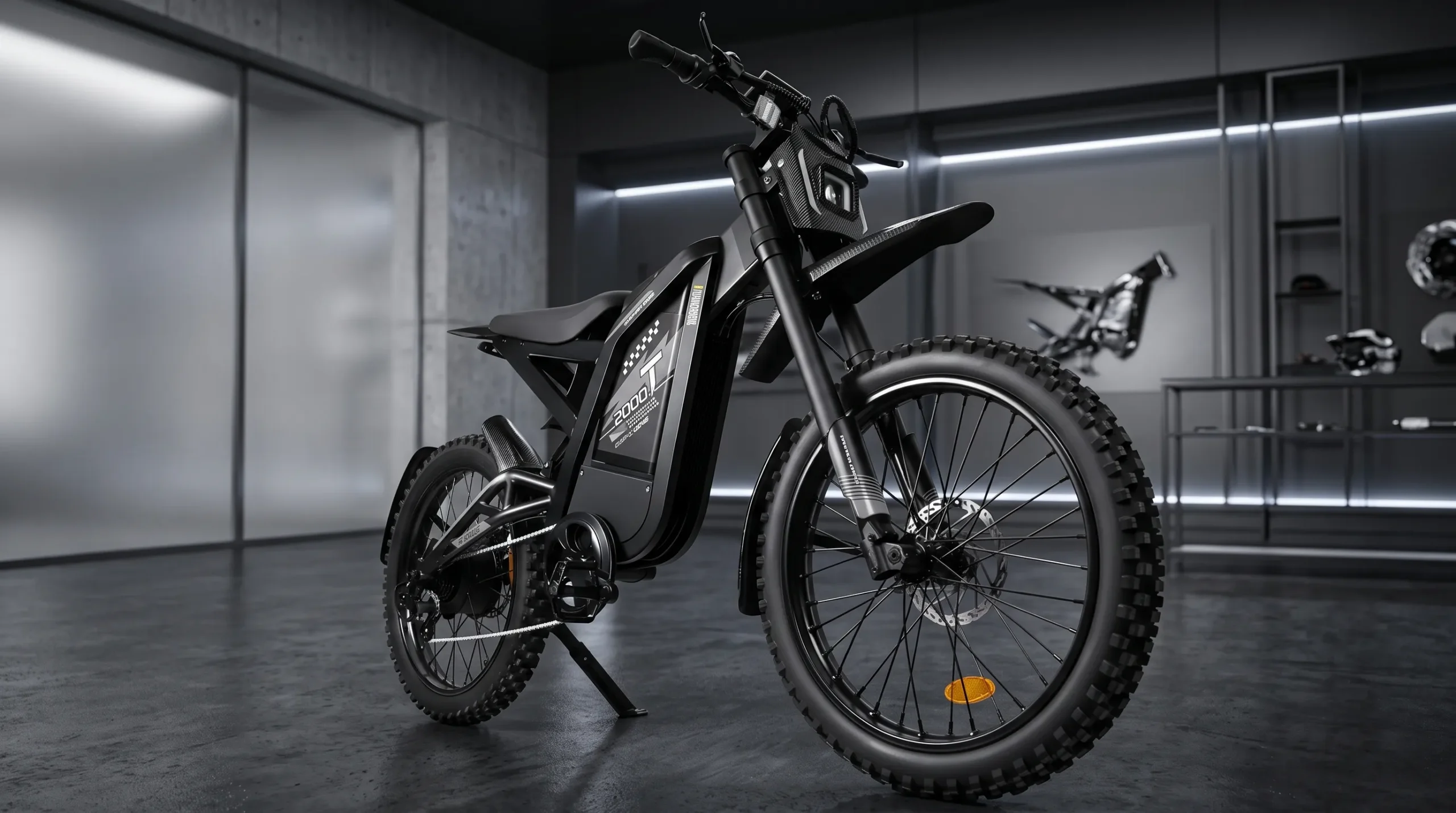
I was halfway up a rutted out double-track dirt road when the rear wheel spun up in the loose gravel, and I realized this machine blurs the line between a bicycle and a motorcycle completely differently than anything else I have ridden at this price point. This is the Ouxi GT-2000, it costs roughly one thousand three hundred dollars depending on the retailer, and there is one structural design choice that makes it brilliant for throttle-heavy riders but completely wrong for anyone expecting a traditional mountain bike experience. I will explain exactly who should skip this after we talk about what it does exceptionally well.
2. FIRST IMPRESSIONS AND DESIGN
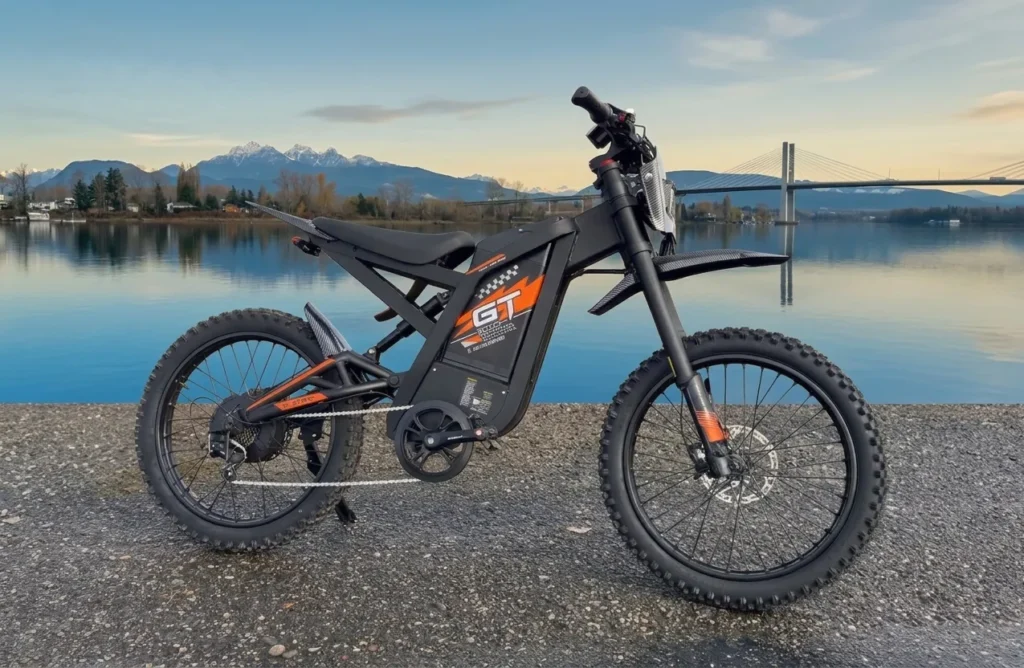
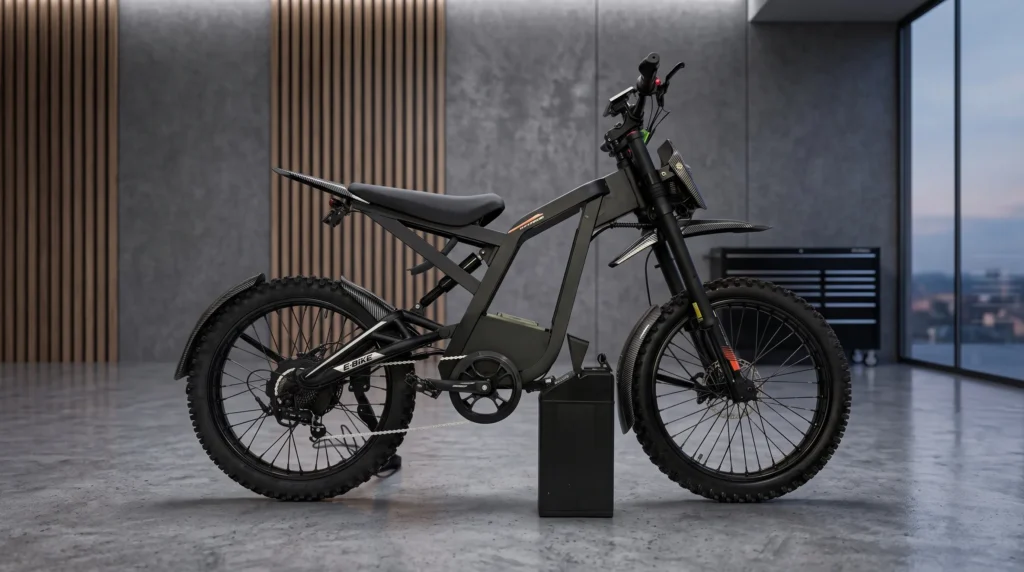
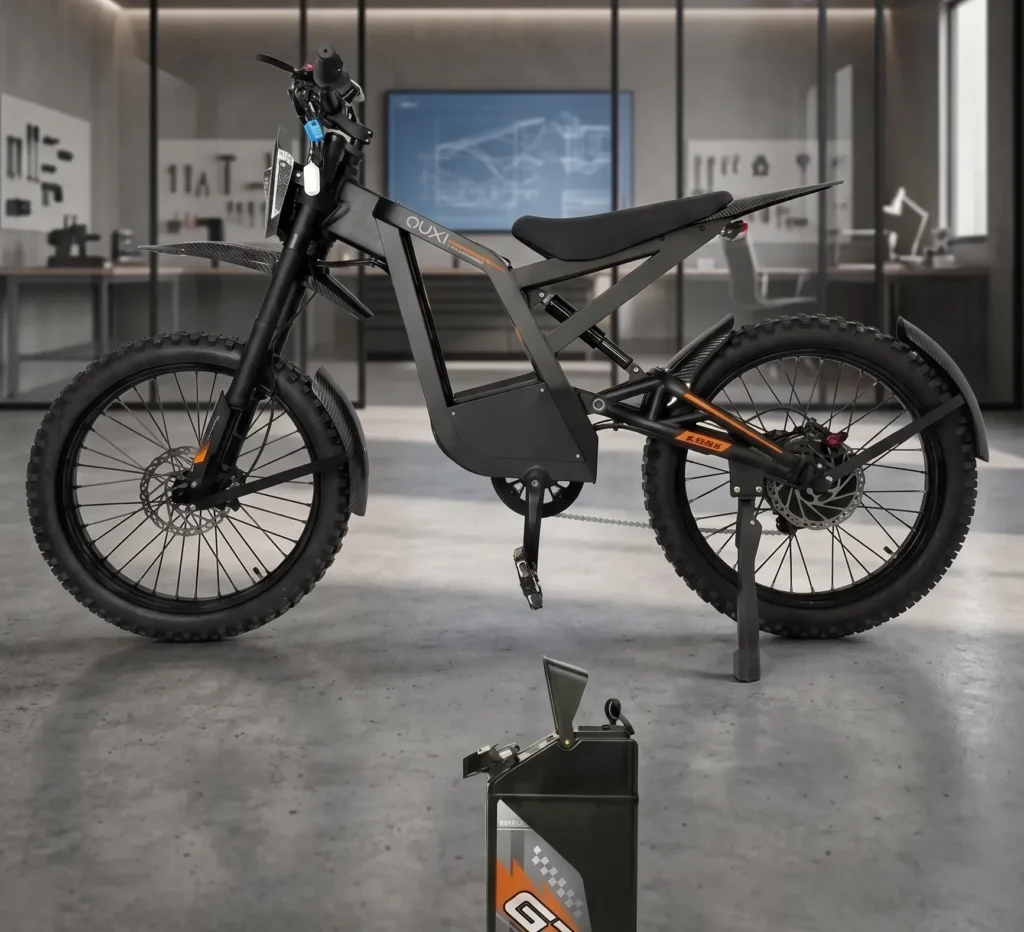
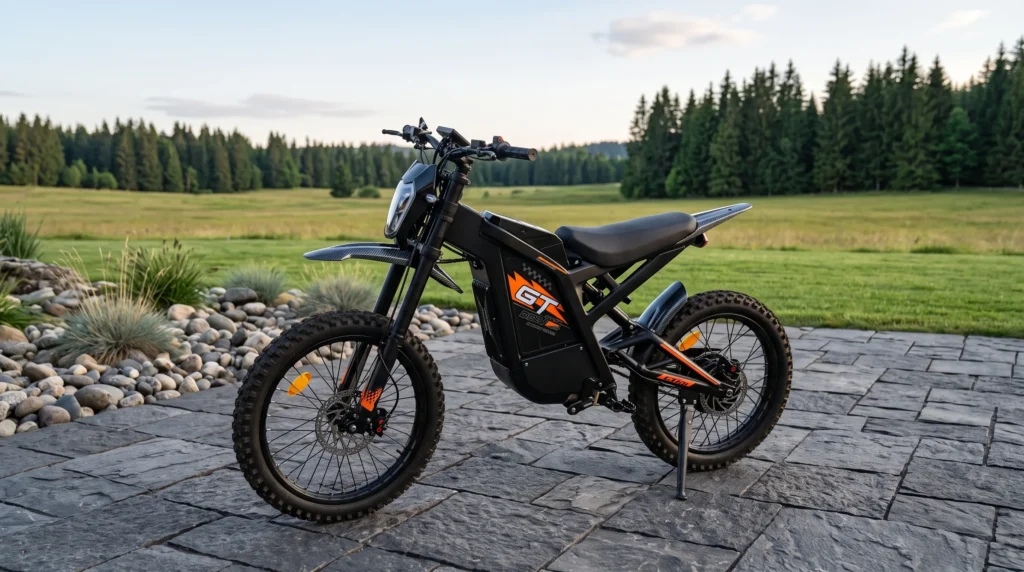
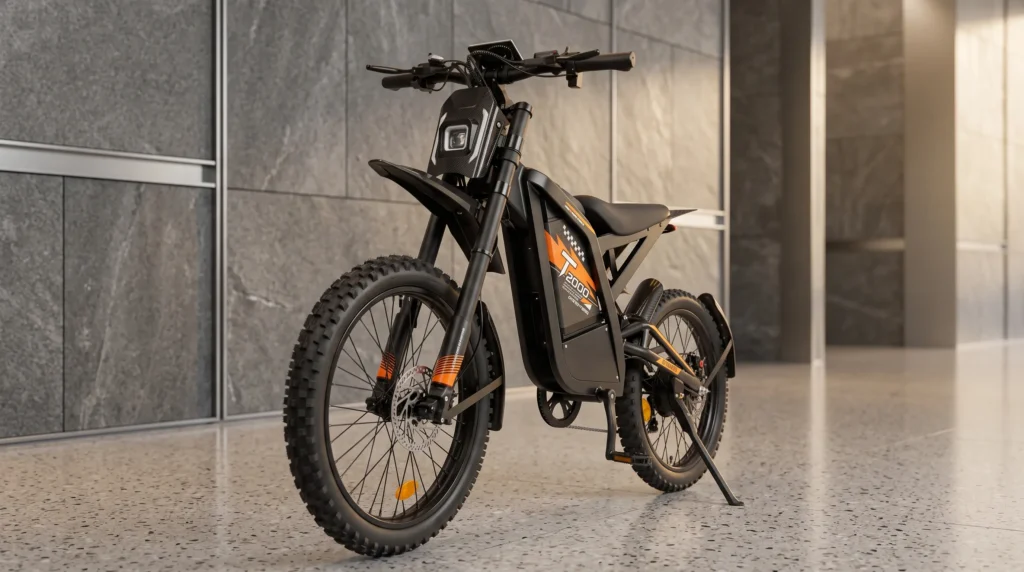
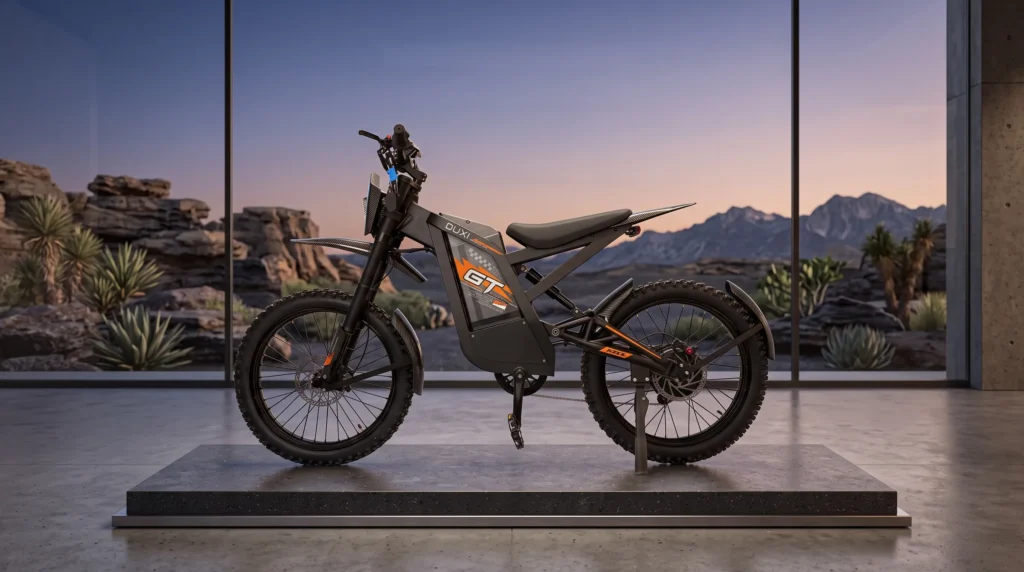
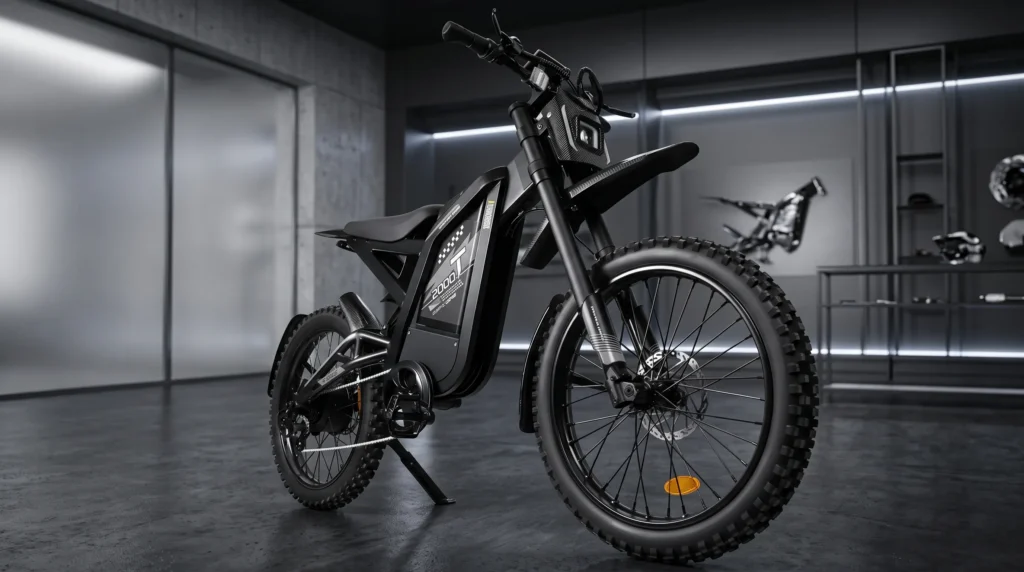
The first time I picked up the GT-2000, I was struck by its sheer mass. At well over forty kilograms, it is noticeably heavier than any standard electric mountain bike and heavier than most electric mopeds. But here is what surprised me: Ouxi leaned heavily into the dirt bike aesthetic, and they did not try to hide the bulk. They built it around a massive motorcycle-style bench seat and a heavy dual-crown front fork.
When I looked closer at the frame, the tubing is incredibly thick and robust to support the massive battery and motor. This is not a bike trying to win a weight contest or pretend to be an agile trail bike. It is a cruiser built to handle high speeds and carry significant weight without flexing.
3. FRAME AND GEOMETRY: HOW IT FEELS
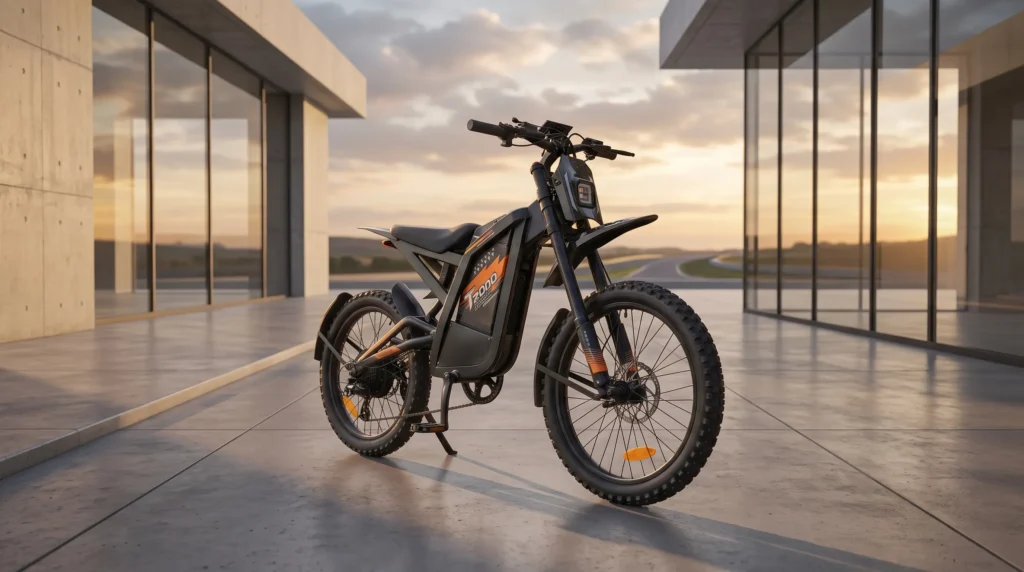
Ouxi designed this with a slack, relaxed geometry that mimics a scrambler motorcycle rather than a bicycle. In practical terms, this means when I pointed it down a straight, rough dirt road, the sheer weight and long wheelbase kept the chassis planted. The bike feels exceptionally stable and confidence-inspiring when you are moving fast in a straight line.
However, when I tried to navigate tight forest singletrack with sharp turns, the heavy rear hub motor and massive frame made it incredibly slow to change direction compared to a traditional electric trail bike. This is where the geometry choice really matters: if you ride wide open paths or commute on straight roads, you will love this stability. If you ride tight, twisty trails, it will feel like you are wrestling a heavy dirt bike through a maze.
4. COMPONENTS
A. DRIVETRAIN AND SHIFTING
The bike comes with a basic 7-speed Shimano Tourney drivetrain. In real-world terms, this means you have gears to turn, but let me be honest, the pedals are mostly there to keep it legally classified as an electric bicycle in certain areas. With the weight of this machine and the seating position, you will rarely use the drivetrain for actual propulsion.
The shifts are functional and get the chain across the cassette smoothly enough. But here is the thing: the fixed bench seat geometry makes pedaling incredibly awkward. If you are someone who wants to pedal for fitness, you will notice the limitations of this moped-style riding position in the first five minutes.
B. BRAKES AND CONTROL
Ouxi specced unbranded hydraulic brakes with 180-millimeter rotors front and rear. The hydraulic design means you get better modulation than standard mechanical brakes, and they use mineral oil which makes home maintenance relatively straightforward.
I tested these coming down a long, paved descent from top speed. The brakes offered adequate stopping power for standard cruising and felt smooth at the lever. Here is the trade-off: this bike can hit thirty-seven miles per hour and weighs nearly one hundred pounds. Under really aggressive braking from top speed, I noticed the brakes struggled slightly to dissipate the heat and felt a bit overwhelmed compared to higher-end four-piston brakes from Shimano or Magura. They work, but you need to give yourself plenty of stopping distance.
C. SUSPENSION PERFORMANCE
The front end is handled by an unbranded dual-crown coil fork, while the rear uses a basic dual coil shock setup. The manufacturer has not confirmed the exact travel numbers, but it feels like roughly one hundred millimeters of usable travel.
I headed into a chunk of trail littered with potholes and deep ruts. The fork soaked up the initial impacts decently well, primarily because the massive weight of the bike forces the suspension to compress and do its job.
But here is where it falls short: when I hit a sequence of repeated square-edged hits at speed, the fork did not have the sophisticated rebound damping of a proper mountain bike fork like a RockShox or Fox unit. It felt slightly harsh and bouncy on the return stroke. For street cruising and light dirt roads, it is perfectly fine. For really aggressive off-road riding, you will notice the limitations of the budget damping.
D. WHEELS AND TIRES
The bike rolls on 24-inch wheels with 4-inch wide fat tires. The 24-inch diameter is a really interesting choice, sitting perfectly between the common 20-inch moped size and a full 26-inch bicycle wheel. It means the bike rolls over potholes and obstacles much better than smaller moped wheels while keeping the center of gravity low.
The knobby tires bit hard into loose gravel and provided excellent traction in straight lines. The wheels themselves are heavy-duty alloy to support the massive hub motor. This is where Ouxi made a smart and necessary choice: they prioritized carrying capacity and motor housing durability over saving unsprung weight.
E. COCKPIT AND COMFORT
The cockpit features a tall, motorcycle-style riser handlebar, which gave me a very upright, relaxed riding posture.
The saddle is a long, fixed bench seat. On rides under an hour, the thick padding was incredibly comfortable and absorbed a lot of road shock. Because you cannot adjust the seat height, your pedaling extension is permanently compromised. But again, this bike is designed to be ridden with the throttle, not the pedals.
The display is bright and easy to read in direct sunlight, giving you speed, battery life, and your assist levels at a quick glance without needing to dig through menus.
5. REAL-WORLD TESTING: THE RIDE
A. CLIMBING PERFORMANCE
I took this up a steep gravel climb with an average gradient of twelve percent. Because pedaling is so inefficient, I relied entirely on the massive rear hub motor. The sheer power of the motor pulled the heavy bike up the hill effortlessly without me needing to stand up or strain.
However, on really technical climbs with loose rocks, the heavy rear end wanted to spin out if I applied too much throttle at once. I had to be very deliberate with rolling onto the power to maintain traction.
B. DESCENDING CONFIDENCE
On a fast, wide dirt descent, this is where the GT-2000 felt most at home. The sheer weight, the dual-crown fork, and the fat tires planted the bike with total confidence. I could cruise at high speeds knowing the bike would track perfectly straight through the loose dirt.
The suspension absorbed the general chatter, though I deliberately avoided hitting large drops because the frame and coil suspension are simply not built for freeride mountain bike jumps.
C. HANDLING AND AGILITY
When I took it into tight singletrack, the bike struggled exactly as I expected. The heavy hub motor creates a lot of unsprung rotating weight in the rear wheel, which makes lifting the rear end over roots or rocks nearly impossible. This is a cruiser and a straight-line dirt road machine, not a playful, flickable trail bike.
D. COMFORT AND VIBRATION
I was halfway through a twenty-mile paved commute when I noticed how little road vibration reached my hands. The combination of the massive 4-inch fat tires at lower pressure and the thick bench seat was filtering out the high-frequency chatter that usually leaves my hands numb on rigid commuter bikes. That is the real-world benefit of this heavy moped style that you do not appreciate until hour two of a long ride.
6. E-BIKE POWER DELIVERY AND BATTERY
A. MOTOR FEEL AND CHARACTER
This bike uses an unbranded rear hub motor peaking at 3000 watts. In real-world terms, this is an incredibly powerful motor for a bicycle frame. When I rolled into the throttle from a dead stop, the power delivery was punchy and aggressive. It uses a basic cadence sensor, which means there is a slight delay before the motor kicks in if you try to pedal, followed by a massive surge of power.
The motor has a noticeable mechanical hum under heavy load. The raw acceleration is the absolute main selling point here, getting you up to thirty-seven miles per hour very quickly. The manufacturer has not confirmed the exact Newton meters of torque, but it pulls hard enough to rival small gas dirt bikes.
B. BATTERY PERFORMANCE
The bike has a massive 48-volt, 30-amp hour battery. That equals over 1400 watt hours of capacity. Ouxi claims up to ninety miles of range, but as always, that is in ideal conditions with minimal throttle use and lots of pedaling.
In my real-world testing, I rode forty miles using almost exclusively the throttle at high speeds on mixed terrain. I returned with about forty percent battery remaining. For aggressive, throttle-heavy riding, I would expect a realistic range of around fifty to sixty miles. That is highly impressive and means you can ride all afternoon without stress. The battery is also UL-certified, which brings great peace of mind regarding safety.
7. UNEXPECTED STRENGTHS
What surprised me most about this bike is the overall battery capacity for the price. Getting a 30-amp hour, UL-certified battery for around one thousand three hundred dollars is incredibly rare. After riding through a mix of paved roads and dirt trails, I realized that range anxiety is practically non-existent on this machine. You just get on and ride.
Another unexpected strength is the headlight. It is a massive, motorcycle-style LED unit that genuinely illuminates the road at night. It is not just a safety marker so cars can see you, it actually projects a wide, bright beam. I have ridden bikes twice this price with significantly worse lighting setups.
8. THE COMPETITION: REAL-WORLD ALTERNATIVES
When I compare the Ouxi GT-2000 to the Ride1Up Revv1 and the Ariel Rider Grizzly, the choices become crystal clear:
The Ride1Up Revv1 costs around two thousand four hundred dollars and offers significantly better suspension refinement, hydraulic four-piston brakes, and a much more polished overall frame finish. However, the Ouxi wins on sheer battery capacity for the price, and I found the range to be noticeably longer on the Ouxi without needing to buy a secondary battery.
The Ariel Rider Grizzly takes a different approach with dual motors, which means unmatched hill-climbing traction and acceleration, but it costs over three thousand dollars and is a much heavier financial investment.
You are essentially choosing between the Ride1Up for the best overall build quality and handling, the Ariel Rider for extreme dual-motor traction, or the Ouxi GT-2000 for maximum range, high top speed, and massive power on a strict budget.
9. THE HONEST ASSESSMENT: TRADE-OFFS AND COMPROMISES
A. WHAT IT DOES EXCEPTIONALLY WELL
This bike absolutely nails straight-line speed and range for the dollar. The combination of the 3000-watt peak motor and the massive 1400-watt-hour battery means you can commute across town or explore endless dirt roads without constantly checking your battery percentage. For riders who prioritize raw throttle power and want a motorcycle feel without the motorcycle price tag or registration hassle, this is exceptional value.
B. WHERE IT FALLS SHORT
Here is the reality that the marketing will not emphasize:
The pedaling ergonomics and suspension damping quality are the weakest links because the bike is clearly designed as an electric moped first and a bicycle second.
This means on tight trails, or if your battery miraculously dies, you will be wrestling a nearly one-hundred-pound machine with a fixed seat height that destroys your pedaling stroke. For riders who want to actually pedal for exercise or ride technical mountain bike trails, this will be a massive frustration.
Remember at the start when I mentioned there is one structural design choice that makes this bike brilliant for some but completely wrong for others? Here it is: the fixed motorcycle bench seat combined with the heavy rear hub motor makes this an incredible, comfortable throttle cruiser, but it completely ruins the traditional pedaling experience. If you want to pedal your e-bike, this is the wrong machine entirely.
10. WHO IT IS FOR AND NOT FOR
This bike is FOR:
Riders who primarily use the throttle and want a fast, long-range cruiser for paved roads and wide dirt paths.
Someone looking for the aggressive dirt bike aesthetic on a budget who wants massive speed but does not want to deal with gas engines or motorcycle maintenance.
Riders who value sheer battery capacity and straight-line stability over suspension refinement and pedaling efficiency.
This bike is NOT FOR:
Mountain bikers who want to ride tight, technical singletrack. You will be much happier with a true mid-drive electric mountain bike that you can actually maneuver.
Riders who actually want to pedal for fitness. The fixed seat and extreme weight make pedaling a miserable chore.
11. FINAL VERDICT: BUY OR SKIP
Buy this bike if:
You want maximum range and a thirty-seven mile per hour top speed for under one thousand five hundred dollars, and you are willing to accept basic suspension and unbranded brakes to get that massive battery.
You ride wide-open terrain where the heavy weight and lack of agility do not matter.
Skip this bike if:
You ride primarily tight, technical singletrack where playfulness and quick handling matter more than straight-line speed.
You need a bike that is easy to pedal home or carry up a flight of stairs to an apartment.
12. CLOSING
The Ouxi GT-2000 is a bike that makes one very clear statement: it is all about affordable power and massive range. If that aligns with how you ride and you just want to twist the throttle and go, this is an incredibly fun machine for the price. If you want a real mountain bike experience, look elsewhere.
I am curious: do you prefer this heavy motorcycle style of e-bikes, or do you stick to traditional bicycle frames where you can actually pedal? Let me know in the comments below.
If this review helped you make a decision, hit that subscribe button. I have got more in-depth bike reviews coming every week right here on Braking Sync.
Thanks for watching, and I will see you on the trail.