

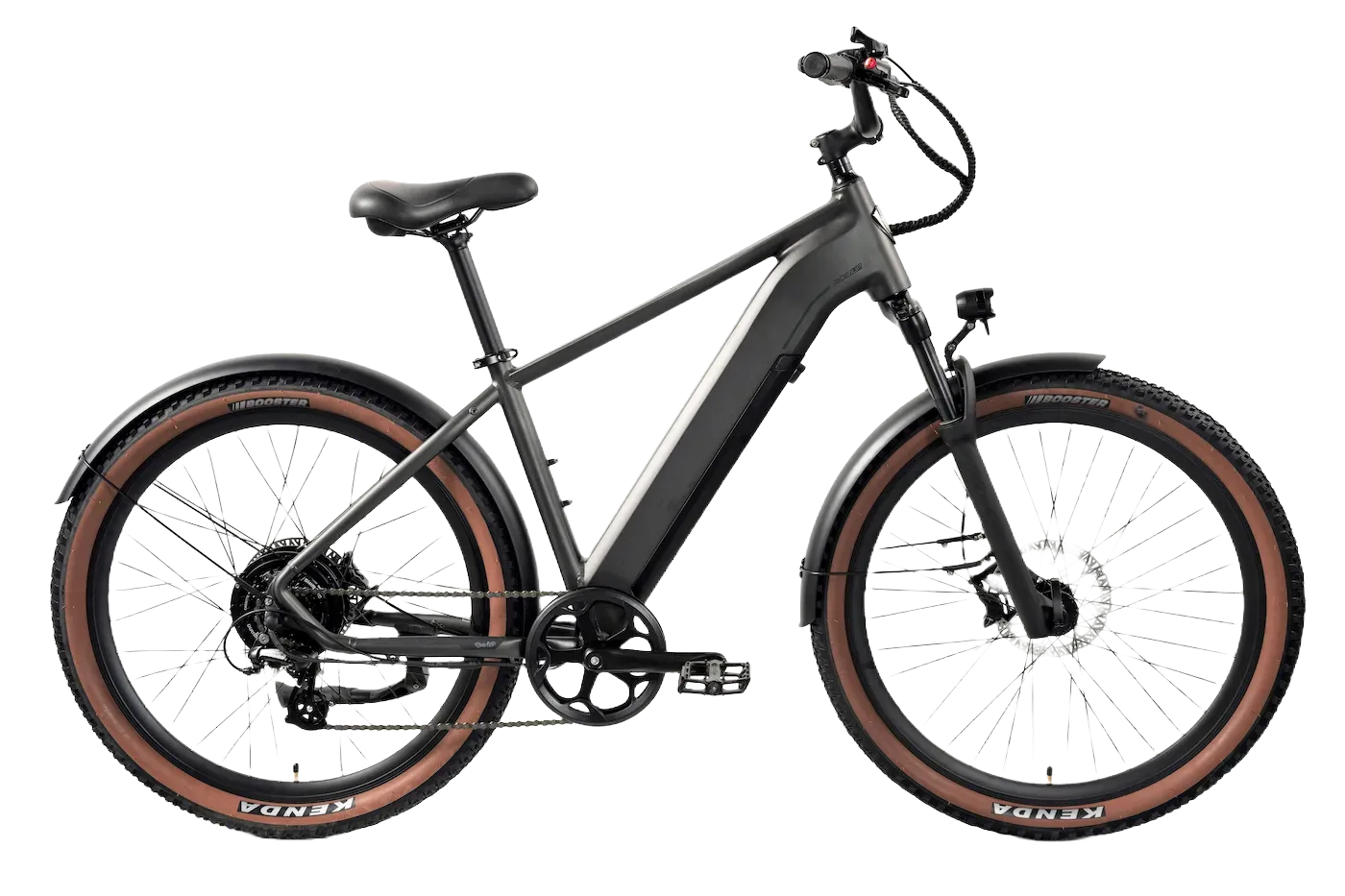
I was flying down a gravel connector trail this morning, the kind of path that bridges the gap between suburban asphalt and the local forest loop, when I realized I was holding a steady twenty-five miles per hour without even breaking a sweat. This is exactly where the Ride1Up Turris lives. It is a Class 3 e-bike designed to be a versatile hybrid that blurs the lines between a rugged adventurer and a daily city commuter.
The Turris Philosophy
When Ride1Up released the Turris, they pitched it as an “adventure-style” commuter. In a market flooded with specialized bikes that cost as much as a used car, this bike tries to be the one-size-fits-all solution for the rider who wants to hit the office on Monday and a light dirt trail on Saturday. It does not pretend to be a high-end mountain bike or a featherweight road machine. Instead, it focuses on providing the most “bang for your buck” by stripping away the fluff and focusing on a punchy motor and a stable ride. At just over a thousand dollars, it enters a very crowded space, but its unique geometry and tire choice help it stand out from the pack of generic budget offerings.

Frame and Build Quality
The foundation of the Turris is a 6061 aluminum alloy frame, which I found remarkably stiff and responsive for a bike in this price bracket. You can get it in either a traditional high-step frame or a step-through version, which is great for accessibility. The geometry is decidedly upright, placing the rider in a position that offers a commanding view of traffic while keeping weight off the wrists. I noticed the integrated battery design keeps the center of gravity low, which helps the bike feel stable even when you are pushing it toward its top speed. It weighs in at about fifty-five pounds, which is relatively light for a full-sized e-bike with a motor this powerful. The welds are clean, and the matte paint finish gives it a premium look that punches way above its actual retail price.
Power and Battery Performance
Under the hood—or rather, in the rear wheel—you will find a 750-watt sustained geared hub motor. A hub motor is a drive system housed directly inside the wheel hub, and this one provides a surprising amount of torque, specifically ninety Newton-meters. On the road, this translates to a very “zippy” feel. Since this is a Class 3 bike, the pedal assist will stay with you all the way up to twenty-eight miles per hour. I found the cadence sensor, which is the system that tells the motor to start when you rotate the pedals, to be well-tuned. There is a slight delay when you start pedaling, but once it kicks in, the acceleration is smooth and predictable. The 48V 14Ah battery uses high-quality LG cells and is UL certified, meaning it has passed rigorous safety standards for fire and electrical hazards. In my testing, I was able to get about thirty-five miles of range while riding aggressively, which is plenty for most urban round trips.
Drivetrain and Components
For the mechanical side of things, Ride1Up went with a Shimano Altus 7-speed drivetrain. The gearing range is decent, though I did find myself wishing for one more “hard” gear when cruising at twenty-eight miles per hour to keep my legs from spinning too fast. Shifting was crisp and reliable throughout my rides. One of the highlights for me is the inclusion of hydraulic disc brakes. These are brakes that use a closed fluid system to apply pressure, offering much more stopping power and better “modulation” or control than traditional cable brakes. Given that this bike can easily hit nearly thirty miles per hour, having that reliable stopping power is a massive confidence booster. The tires are 27.5-inch Kenda Boosters with a 2.4-inch width. They have a knobby tread that works surprisingly well on pavement but provides just enough bite to handle loose dirt or gravel paths without washing out.

Limitations and Trade-offs
No bike is perfect, especially at this price point, and the Turris makes some clear compromises. First, the assembly process is more involved than many of its competitors. My test unit arrived with the front fork and one of the crank arms uninstalled, which might be intimidating if you are not comfortable with a wrench. Second, the front suspension is a basic coil spring fork with 100 millimeters of travel. While it soaks up small bumps and vibration, it feels a bit “pogostick-like” on larger impacts and lacks the refined damping of an air fork. Additionally, while the bike comes with high-quality metal fenders, it does not include a rear rack as standard equipment. You have to buy that separately, which feels like an odd omission for a bike marketed as a commuter. Finally, the 60-lux headlight is fine for being seen by cars, but if you plan on riding on unlit paths at night, you will definitely want to upgrade to something brighter.
Final Verdict
The Ride1Up Turris is a phenomenal value for the rider who wants a fast, capable, and good-looking machine without spending three thousand dollars. It handles the transition from asphalt to light trail better than almost any other budget commuter I have tested this year.
Buy this bike if you need a reliable Class 3 commuter that can handle “shortcuts” through the park or gravel rail trails and you are comfortable doing a bit of your own mechanical work.
Skip this if you want a “set it and forget it” experience with professional assembly included or if you strictly ride on perfectly smooth pavement and would prefer a lighter, more agile bike with a torque sensor.